





Richard Froese
South Peace News
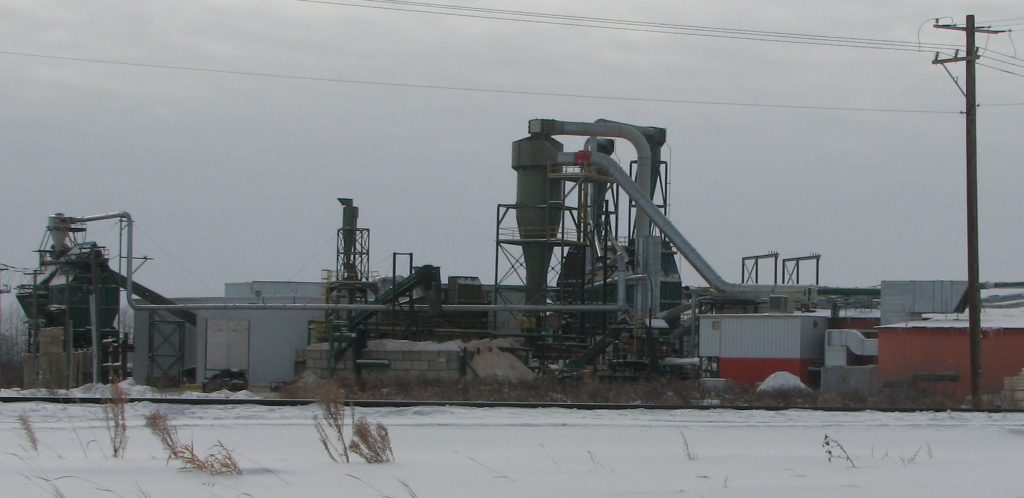
Production at High Prairie Forest Products would be impacted by potential tariffs on forest products going to the United States.
General manager Brandon Marsh addressed Big Lakes County council about the negative impacts at its regular meeting Feb. 12.
U.S President Donald Trump recently announced proposed tariffs shortly after he was inaugurated Jan. 20.
“Here in High Prairie, we rely on our southern neighbours for roughly 50 per cent of our trade,” said Marsh,
“This 25 per cent tariff would greatly reduce our ability to move the volume of product we produce here in our community.
“With the existing solid wood lumber agreements with the U.S., we already have varying levies of penalty applied to our product, which gets compounded with an additional dumping duty.
“If we were to see a 25 per cent tariff, in addition to what is forecast for existing penalty from the U.S., we will likely approach a 50 per cent total tax on all product to be sold in the U.S.”
Part of West Fraser Forest Products Co. Ltd., the High Prairie operation has a staff of about 140 full-time employees while also supporting a large contractor base for other services.
Those people rely an a strong market for their jobs to support families and communities, he said.
“Reduction in the ability to do so could impact on our ability to run at 100 per cent operating schedule, which would obviously impact our employees substantially,” Marsh said.
Those employees pay taxes, shop and thrive in local communities.
West Fraser looks to other options to expand its markets.
“We continue to investigate all global markets as a substitute, but unfortunately we have nothing immediately available,” Marsh said.
Europe has a strong forest industry and well-established trade partners, he added.
China has leaned on Russia during the changing global market and has decreased its dependency on North America.
“Southeast Asia remains an area of focus as demand is growing for our products,” Marsh said.
“The Japanese market continues to draw a strong demand of higher-grade products but provides no immediate fix.”
He added the company is seeking support from government and citizens.
“We, at West Fraser, are trying to rally our local governments and governing bodies, such as the Alberta Forest Products Association, to ensure that provincial and federal leaders continue to push for our industry in ways such as creating a competitive and attractive environment for investment which can aid housing starts.
“We have also asked that both the Town of High Prairie and Big Lakes County councils write letters of support to the provincial government to ensure this message reaches their level.
“We are currently at a deficit for the demand for housing compared to the starts that we see year after year.”
He noted the AFPA continues to encourage municipalities to raise awareness of the issues and concerns.
“The more conversations we have with our families and neighbours about supporting local business, the better,” Marsh said.
“The more united we are, the stronger and more inclusive government response can be.”
Citizens can also do their part to support forestry, he said.
“When looking at what we purchase, think local.
“Anyone looking at building a home, shop, or other structure should consider who they are supporting.
“We should also be pushing our government to reduce red tape and increase incentives for first-time home owners.”
Anything within the government’s sphere of influence should target investors to build more homes, he added.
That helps everyone as affordability continues to spiral negatively.
“More homes equal more affordable housing for all classes of working people,” Marsh concluded.