





Pearl Lorentzen
Local Journalism
Initiative Reporter
“We had a really good representation from the entire region and good representation of types of service providers,” says Jennifer Churchill, speaking on the Alberta North Central Alliance (ANCA) Mental Health and Addictions Symposium.
Churchill is the executive director of ANCA and one of the main organizers of the symposium, which was on Oct. 2, from 9 a.m. to 4:15 p.m. at the Legacy Centre in Slave Lake.
Mental health service providers include ones working for local First Nations, Recovery Alberta (the provincial mental health provider in Alberta), Métis settlements, ones with private practices, and local societies.
In Alberta, there are a few types of public mental health providers depending on whether a person lives on a First Nation reserve, Métis settlement, or in a municipality. First Nations health care is funded by the federal government and run by the First Nations. In municipalities, the public mental health care is provincially funded and run by Recovery Alberta (formerly Alberta Health Services Addictions and Mental Health).
Slave Lake, which is three hours north of Edmonton, is the central to the 55,000 square-km region represented by ANCA.
ANCA is an advocacy group comprised of four municipalities and four First Nations around Lesser Slave Lake, which is geographically in the middle of Alberta.
However, traditionally everything north of Edmonton is considered northern Alberta.
From west to east, local governments include Big Lakes County, Town of High Prairie, Sucker Creek First Nation, Driftpile Cree Nation, Swan River First Nation, M.D. of Lesser Slave River, Sawridge First Nation, Town of Slave Lake, and Bigstone Cree Nation. All except Bigstone are on or near the shores of Lesser Slave Lake. Bigstone has reserves at Wabasca Lakes, Calling Lake, and Chipewyan Lake, east of this lake. From High Prairie to Wabasca (a cluster of Bigstone reserves) is 240 km.
Within this geographic region, there is one other municipality, the M.D. of Opportunity, two other First Nations (Kapawe’no First Nation and Whitefish Lake First Nation), and three Métis settlements –
Peavine, East Prairie, and Gift Lake.
The symposium was open to people working in mental health in any community within this geographic area regardless of whether the local government was a member of ANCA. Around 60 people attended including mental health workers and government representatives.
Mental health a priority
Through ANCA, municipal leaders can advocate for more mental health supports for the region. ANCA’s vision is to work together to identify and advance key regional interests with a strong, unified voice.
The five interests mentioned on ANCA’s website (albertanca.ca) are health care, infrastructure, housing, economic development, and education.
“As a municipality, we understand that mental health and addictions are challenges that touch every corner of our community,” says Big Lakes County Reeve Tyler Airth about the event.
“Sponsoring the Alberta North Central Alliance Mental Health and Addictions Symposium was a crucial opportunity for us to bring together leaders, experts, and community members to address these issues head on. Our goal is to ensure that our residents have access to the resources and support they need to thrive in our community. This event allowed us to foster collaboration and share knowledge that will help us create a healthier, more resilient community for everyone.”
“I am thrilled that ANCA organized the event as this will pull together all the mental health resources available in our region into one document that people can refer to,” says Town of High Prairie Mayor Brian Panasiuk.
“The event will also help identify gaps that we have in the region. Once the gaps are identified, we can work to fill those areas,” he adds.
At the Oct. 9, 2024 M.D. of Lesser Slave River council meeting, councillors Nancy Sand and Sandra Melzer gave a report on the event to council. It included good information on services provided and gaps in the area, said Melzer, in the M.D. notes from the meeting.
The speakers were good but more time was needed for the ‘break-out’ sessions, added Sand.
Part of the event was of a mental health study being done by ANCA.
Before the event, ANCA and the researches, Ballad Group, connected with as many mental health providers in the region and had them do a survey. At the event, the mental health providers and government representatives took part in discussion groups on some of the topics identified.
A few mental health providers will be interviewed in depth after the event for further research. The final study should be available by December.
The various governments involved in ANCA will decide how to distribute the study.
“The intent is to share the information,” says Churchill, “so something can happen.”
Bigstone
Bigstone Health had a lot of representatives at the event, says Churchill.
Bigstone and the M.D. of Opportunity, which it shares borders with, have an ongoing state of local emergency connected with crime and mental health and addictions.
“They are aggressively working for solutions,” says Churchill about Bigstone Health.
The representatives from the Alberta Ministry of Mental Health and Addictions asked to be introduced to the Bigstone representatives.
“It had a really good feeling,” she says.
“There was great collaboration. I think everyone was able to tell their truth.”
Three priorities
The event had three priorities – discussing workforce challenges, connecting mental health workers with each other and government, and showing appreciation for the workers.
“I think we did all three,” says Churchill.
The first was talking about workforce issues among mental health workers.
Mental health workers have one of the highest turnover rates in the region, says Churchill.
The event included discussion groups on topics identified as part of a regional mental health study that ANCA has hired a contractor to do. The discussions will be part of the study.
The discussions were “incredibly eye-opening . . .,” said Churchill. “We got to have the hard conversations.”
The second goal was connecting mental health providers with each other and government leaders.
Scott Sinclair, MLA for Lesser Slave Lake, spoke early in the event and took part the remainder of the day. Representatives were also present from the Ministry of Mental Health and Addictions and from the leadership of Recovery Alberta.
“We also wanted to provide them with a really good day,” says Churchill.
“They deserve some regional appreciation for the work they do.”
This included two keynote speakers – Dr. Jody Carrington (psychologist and author) and Earl Thiessens. Carrington did her speech virtually. Thiessen attended the full event and took part in the research discussion.
Thiessen is the executive director of Oxford House Foundation of Canada, which provides affordable sober housing for people in recovery from addictions.
While Churchill took the lead, the eight local governments within ANCA also helped.
“Lots of our ANCA members were there for all or part of it,” says Churchill.
They also took part in the research discussion.
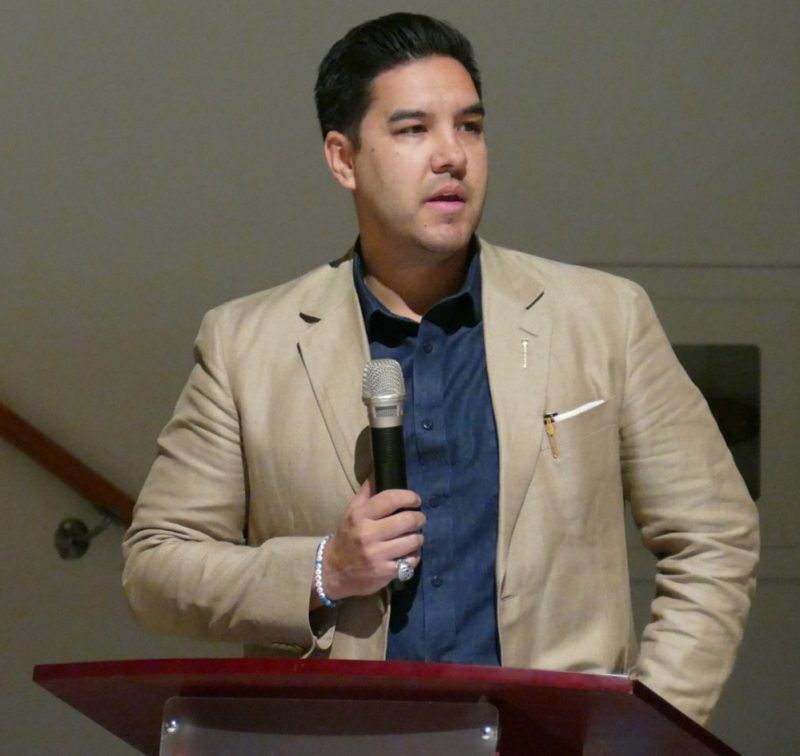
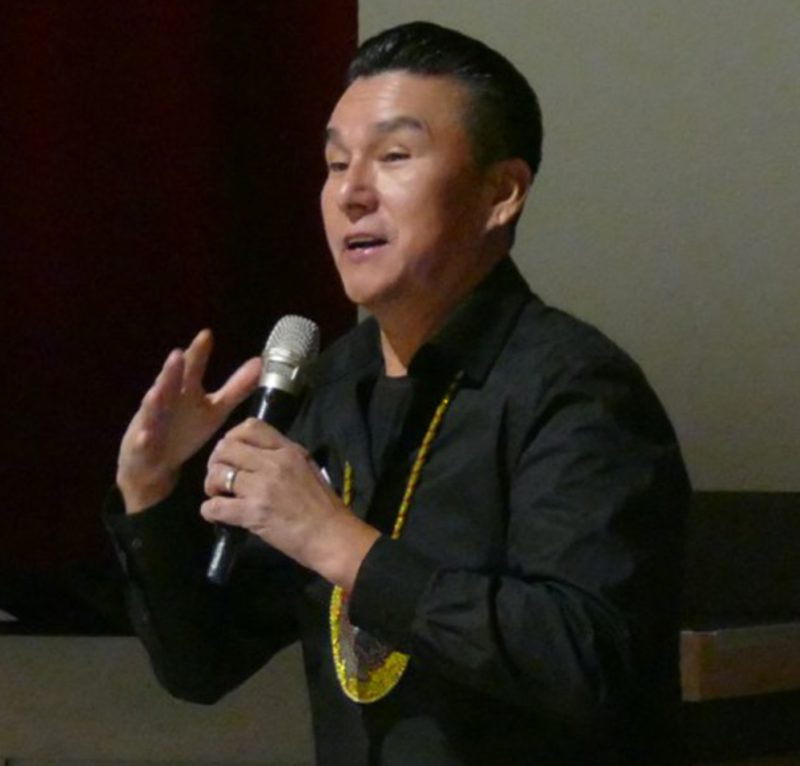
Driftpile Cree Nation Councillor Stan Isadore was the MC.
Slave Lake and Area Mental Health Network (SLAM) partnered on the event offering wellness activities during the event and helping out in other ways. A member of the Rotary Club of Slave Lake also helped.