





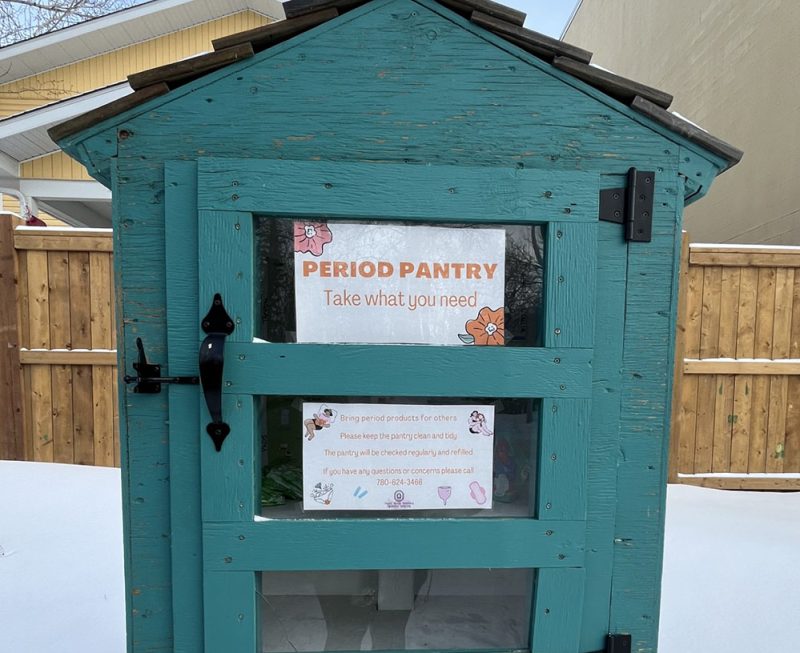
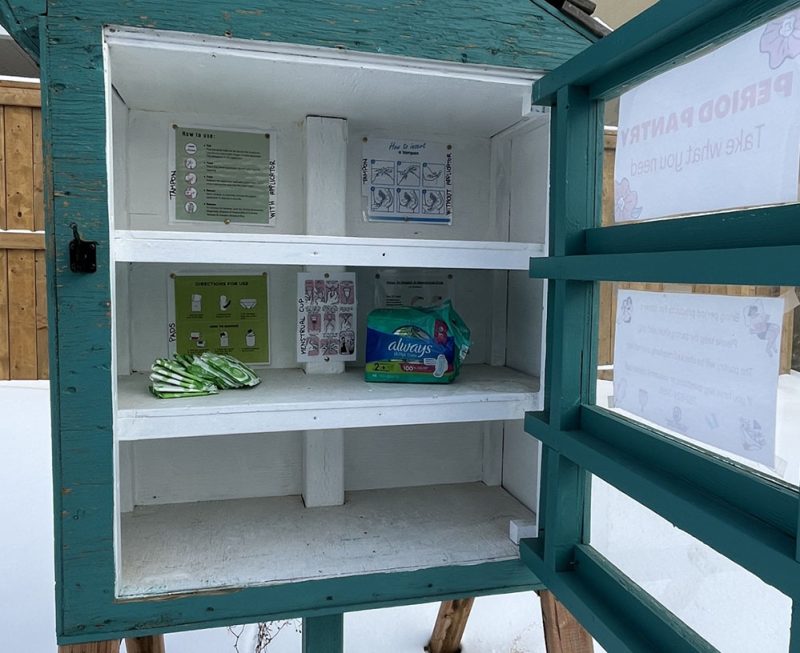
The period pantries located at 10011-98 Street in Peace River and in the north end across from Springfield Elementary are both incredibly void of period products. Family Violence advocate Nadine Robinson asks that the community rallies together to help refill the pantries, if they are financially able to help. Any period products are welcome, including sanitary napkins, liners, menstrual cups, period panties tampons or any other similar items.
Emily Plihal
Local Journalism
Initiative Reporter
A community effort is in dire straits and needs your assistance to boost its efforts to help women in need of sanitary products.
The Peace River Regional Women’s Shelter created two period pantries in Peace River, and donations have dwindled in the pantries, requiring a little extra help from community members to refill them.
“We have seen an increase in supplies being taken from the pantry and require all products including pads, liners and tampons of various sizes,” says Family Violence prevention advocate Nadine Robinson.
“Our vision upon starting the pantry was to have it community based and have the community come together to support ending Period Poverty, knowing our budget would not last forever. Upon start-up of the pantries, we were fortunate enough to have financial assistance, grants and businesses sponsor the pantry that lasted for months although the need is greater than we could have anticipated.”
Robinson says in order to continue to keep the stock up they are in need of the community to once again come together.
“Unfortunately, our funding lacks as it is and as much as we would love to be able to budget period products to stock the pantries, it is not feasible at this time,” she explains.
“Alberta Council of Women’s Shelters (ACSW) provides some products as per a grant they were provided and distributed to partnering shelters working towards ending Period Poverty on a larger scale. We are always on the lookout for grants, financial support and donations.”
Robinson says one pantry is located at 10011-98 street in Peace River, downtown right beside the mental health building. She says the other pantry is located in the north end across from Springfield Elementary, up the driveway.
“The community can donate period products that they buy at the store or have extra stock of, they can donate monetarily via cash, cheque or online,” Robinson says.
“People can advocate for the government to increase funding of shelters across the province to ensure our operating budget is feasible and could allow us to provide as a shelter financial assistance to the period product pantries.”
Robinsons says the pantries are quite low in products, indicating there could be major financial struggles in the community. She says Period Poverty is something that no woman should have to encounter, and that having sanitary products can make a big difference in confidence, boost self-esteem and self-image with the woman knowing she won’t leak or have an accident.
“The period pantries were created to help end Period Poverty,” she notes.
“Having access to period products is important to prevent physical health issues such as toxic shock syndrome, which can happen when using period products longer than the intended use. Lack of period products or clean period products can stop people from attending work, school or social activities.”
Robinson says having the program is important for Peace River because Period Poverty is real and the shelter believes access to period products should be a basic human right, free of charge everywhere.
“The period pantries are out in the open, visible to all and have information sheets on how to use the products,” she says.
“Having periods is not shameful and does not need to be hidden. We saw a need that needed to be met and we wanted to address it the best we could.”
Robinson says they’ve had people reach out to them to let the shelter know they have accessed the pantry to ensure they had clean supplies and felt they were able to utilize their income on other items such as food and didn’t have to balance between buying food or period products that trip but could have access to both needs with the assistance of the period pantries.
“The shelter is doing the best we can with the resources we can to ensure the pantry is stocked although without community support they may not be able to remain stocked up and accessible to our community,” she says.
“We would not get rid of them although the demand for the products is greatly outweighing our capacity to ensure there are products available. With the support of our amazing community we can ensure that people continue to have access to products when needed.”