





Emily Plihal
Local Journalism
Initiative Reporter
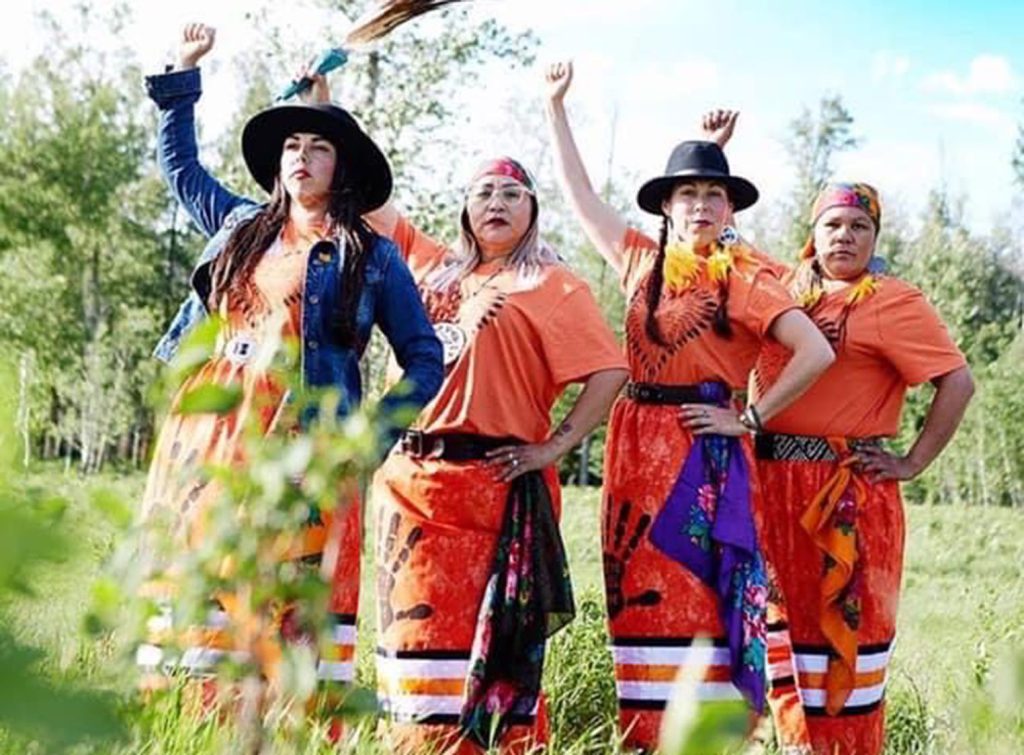
Ribbon skirts are a centuries-old Indigenous tradition, and their importance is rightfully solidifying their symbol of identity, resilience and survival.
The federal government passed a bill to make Jan. 4 an official National Ribbon Skirt Day, a day that was officially celebrated for the first time in 2023.
Ribbon Skirt designer from Edmonton’s Acahkos Designs, Rhonda Johnson, says wearing the skirt is a time-honoured tradition recognized by all Indigenous groups, Metis women, girls and members of the LGBTQ2s.
“It is one way towards reclamation of our culture and spirit that was stripped away from our people,” says Johnson.
“Ribbon skirts were created once the Europeans brought their goods for trade, such as beads, blankets, fabrics, and of course the ribbons.”
Ribbon skirts are worn to celebrate the Indigenous culture, strength and their connection as women. It is a symbol of womanhood and is often seen as an identifying piece connecting the person to the Earth and Grandmother moon.
“Ribbon skirts are worn as everyday wear, not only just for ceremonial purposes or as regalia,” Johnson explains.
“Some people may dream or see a vision of their colours and patterns. Some may enter ceremony with proper protocol to be gifted the colours and patterns and some may just simply draft what they envision.”
Johnson explains it is important for non-Indigenous people to understand the importance of the Ribbon Skirt and whether they should be wearing one.
“It is important for non-Indigenous people to learn the protocols of wearing a ribbon skirt,” she says.
“There are some non-Indigenous people who are gifted their skirts as they may be an ally who advocates and understands the protocols of indigenous culture.”
The ribbon skirt is worn by women of every stage of life to recognize the history, culture, and trauma that has been experienced by Indigenous women.
“(People should understand) that it is worn as everyday wear just as other cultures may wear their traditional attire,” says Johnson.
“It is a symbol of reconnection, honour, and beauty.”
Although not everyone wears a ribbon skirt, they can be a way for Indigenous people to reconnect to their culture and to help gain a sense of kinship. From years of forced assimilation, many aspects of the culture were not focused on or even lost temporarily.
“Indigenous people are slowly reconnecting back to their roots after enduring many years of disconnection, trauma and intergenerational trauma,” Johnson indicates.
“We are teaching our younger generations to wear one with pride as we are finally able to return back to our ancestral roots.”
Johnson says she is proud of her culture, and she chose to start designing skirts to honour the traditions.
“I taught myself how to design ribbon skirts, it was instinctual, and came naturally,” she says.
“I design everything from simple ribbon skirts to couture ribbon skirts in both traditional and contemporary runway fashion.”
Johnson is from Treaty 8 Territory of Bigstone Cree Nation. She has been designing and beading for over 20 years and has completed Fashion Design and Apparel Production in 2006. Her home-based business Acahkos Designs helps to create both traditional and contemporary designs and jewelry.
“Our ancestors were natural seamstresses and I believe that I was destined to become one also,” she says.
“I take pride in my skills and ability to share my knowledge and gifts.”
Johnson urges Indigenous people to learn more about their culture, speak to elders and embrace time-honoured traditions.