





South Peace News presents a series of question-and-answer features from elected local government leaders to explain goals and issues in the coming year.
School division board chairs were asked a series of questions.
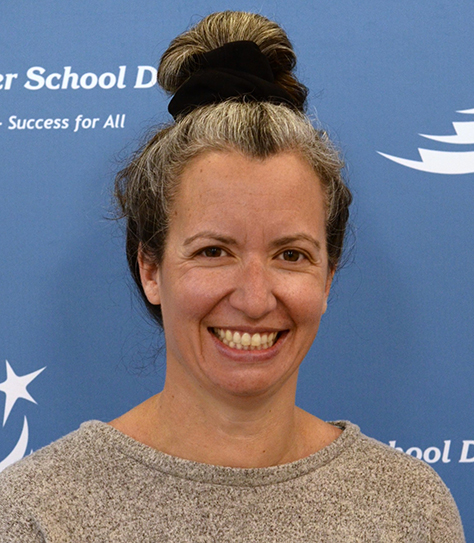
Lacey Buchinski has served as the board chair of Peace River School Division since October 2025.
Question 1 – Looking ahead to 2026, what do you want to see accomplished, why and how?
Buchinski – Looking ahead to 2026, the board of trustees aims to take on a proactive position regarding the gradual decline in enrolment across the division.
Our goal is to ensure that every student, regardless of how remote their home may be, maintains access to high-quality programming while we continue to manage our fiduciary responsibilities.
To accomplish this, the board will focus the remainder of this 2025-26 school year on gaining a clearer picture of how to best support our small rural communities with strong public education opportunities.
Another key objective is providing the necessary support to our central operations and school staff as they work to improve school attendance rates..
Because consistent attendance is a significant predictor of student success, the board is committed to supporting our teams in their efforts to connect with families and bring students back into the classroom with more-regular attendance patterns.
Question 2 – What are the top priorities, projects, issues?
Buchinski – For the board of trustees, our top priorities remain the topics identified in our advocacy priorities document.
These include seeking fair and equitable funding for small rural school divisions, finding a solution to utilization funding in underutilized school buildings and ensuring adequate transportation funding and improved safety.
We also continue to advocate for stable funding for student mental health supports and recruiting specialists, such as occupational therapists, speech pathologists and
physical therapists, to work in our schools.
Additionally, we look forward to engaging in the value-scoping process with the community of Peace River and local partners in a conversation about what changes may be necessary in the future of PRSD schools in Peace River.
Question 3 – What are the key things to move the school division forward to be sustainable and grow in the future?
Buchinski –
(No comment)
Question 4 – What are the biggest challenges facing the school division in a northern rural region with stagnant or declining population and enrolment and how will the division overcome them?
Buchinski – When enrolment drops, the cost per student increases.
To overcome these challenges, the board is prioritizing transparency and engagement by working to educate our local communities on the complexities of how small rural schools are funded.
By fostering this shared understanding, we can better engage with our communities to identify their specific educational needs and determine how to most effectively allocate the financial resources we are provided.
Furthermore, we are actively collaborating with other school divisions facing demographic pressures.
By aligning our efforts, we aim to build a stronger collective voice at the provincial level to ensure the unique needs of northern rural education are recognized and addressed.
Question 5 – What is the most challenging things about your role as board chair?
Buchinski – One of the most complex aspect of serving as board chair, particularly in a small-town setting, is maintaining the clear distinction between operations and governance.
Because people in the community often know their elected officials personally, it is common for individuals to reach out directly with concerns regarding school schedules, specific staff members or day-to-day administrative decisions.
While I value these personal connections and the passion our residents have for their schools, the role of the board is to provide high-level strategic oversight and policy direction, rather than managing the daily internal operations of a school building.
Navigating these conversations requires a delicate balance of listening to citizens’ concerns while ensuring that operational matters remain with the professional staff who are best equipped to handle them.
Question 6 – What are some of the biggest challenges the school division faced in 2025?
Buchinski – The process regarding the closure of Dixonville School was undoubtedly the most significant challenge the division faced in 2025.
After years of declining enrolment, the corresponding drop in funding made it increasingly difficult to provide the high-quality programming that students deserve, which eventually necessitated the heart-wrenching decision to close the facility.
Managing this transition required a massive emotional and logistical undertaking as the board worked to honour the school’s long-standing legacy while ensuring a smooth path forward for the students and families involved.
Question 7– What was the most unexpected thing the school division had to deal with in 2025?
Buchinski – The most unexpected challenge of 2025 was navigating the complexities of the province-wide teachers’ strike last fall.
Because the strike involved a debate at the provincial level rather than the local level, the board was required to remain neutral throughout the process, recognizing that negotiations and ultimate resolution were part of a broader provincial conversation.
Despite the challenges of this period, our focus remained on the well-being of our school communities.
As a northern rural division where schools serve as the primary hubs for our residents, we remained dedicated to support both our staff and students through the transition back to regular learning.
We continue to value the professional environment our teachers create and are committed to working together for the success of all students in the division.