





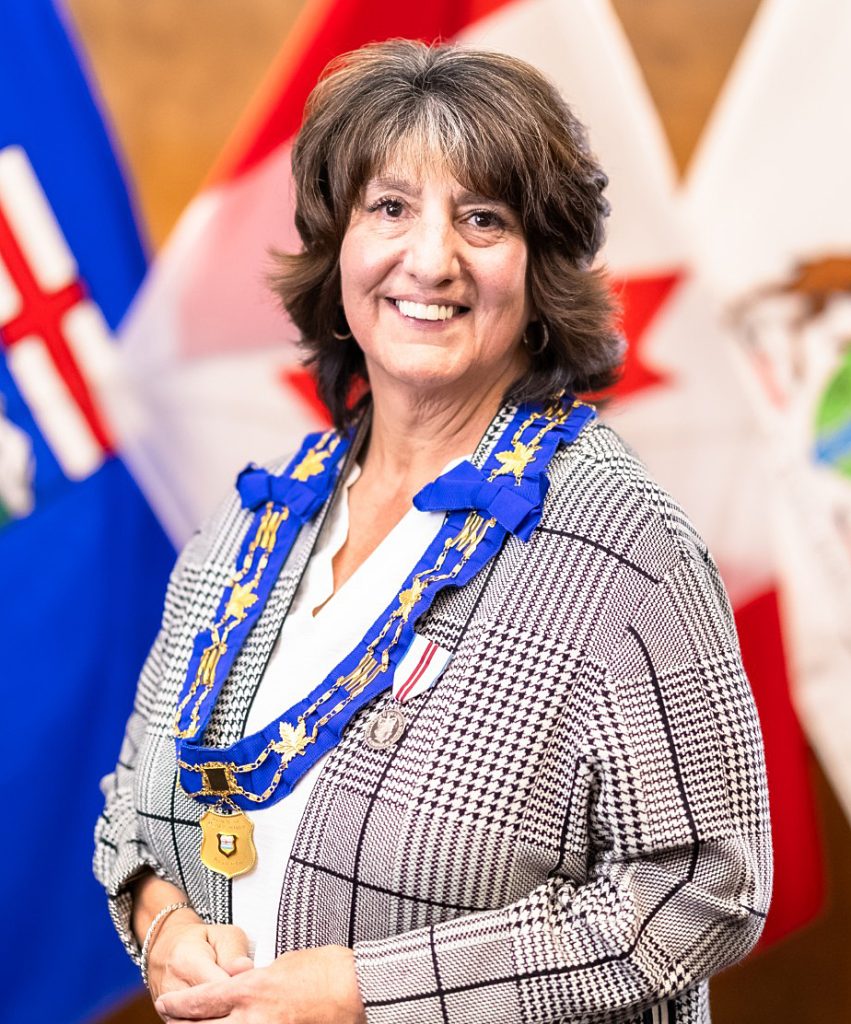
South Peace News presents of series of question-and-answer features from elected local government leaders to explain goals for the coming year. Shelly Shannon became the mayor of the Town of Peace River in October 2025, after serving as a councillor.
FROESE: Looking ahead to 2026, what do you want to see accomplished as a council, why and how?
SHANNON: We have a council that is diverse and creative.
We’re united in what we want to achieve. That alignment makes a big difference when it comes to moving priorities forward.
Community relations and communications will also be elevated this term.
Civic pride needs to return to our hearts and minds to truly own our community.
Looking ahead to 2026, we would like to see real progress in areas like housing, infrastructure and economic development. Those are the pieces that will set us up for long-term success and help keep Peace River strong and competitive.
We’ve already taken steps to update policies and improve how we do business and we’ll keep building on that.
A big part of our focus is making sure we’re ready for that opportunity.
At the end of the day, it’s about being practical and resourceful.
We want to make decisions now that put our community in a better position a few years down the road.
FROESE: What are the top priorities, projects, issues in 2026?
SHANNON: A big priority for us us strengthening our relationships across the region. We know we’re stronger when we work together and there are a lot of shared opportunities if we take that approach.
We’re also really focused on being ready for investment. That means making sure our policies make sense, our processes aren’t slowing things down and we’re easy to work with.
Tourism continues to be important, too. We have a lot to offer and there’s more we can do to showcase that and support local businesses.
Overall, it’s about supporting the kinds of projects – big or small – that move Peace River forward in a real and practical way.
FROESE: What are the key things to move the municipality forward to be sustainable and grow in the future?
SHANNON: For us, it starts with having the right foundation in place. We’ve updated key bylaws, like the offsite levy and procedural bylaws to better reflect where we’re headed as a council.
Those changes might not always be visible day to day, but they matter. They help create a more predictable and fairer environment for development and making decisions.
Beyond that, we know growth depends on key things likes housing, infrastructure and a strong local economy.
We also need to keep building relationships, both regionally and with Indigenous partners.
There’s no single solution. It’s about being consistent, making thoughtful decisions and creating the conditions where growth can happen.
FROESE: What are some of the most challenging things about your role as mayor?
SHANNON: Time is definitely one of the biggest challenges. There’s always more to do – whether it’s advocating, attending meetings or staying connected with residents.
You also learn quickly that you can’t make everyone happy. The decisions we make have real impacts and sometimes they’re not easy ones. Having that strong team approach to our governance is what will root us in results.
Another thing that stands out is how long processes can take. There are a lot of steps involved in getting things done, and while some of that is necessary, there are times where it could be more efficient.
That said, you learn to be patient and stay focused on the bigger picture. It’s about make steady progress, even if it doesn’t always feel fast.
FROESE: What are the biggest challenges facing the municipality and how will council overcome them?
SHANNON: There is a lot of pressure right now, including rising costs, aging infrastructure and less funding coming from other orders of government.
In the north, things like energy distribution costs add another layer.
But the biggest challenge we’re facing is a lack of housing. We lost two apartment buildings and a lot of our housing stock is older. That makes it harder to attract new people and support growth.
We’re working on it by talking directly with developers and investors, looking at our policies and trying to make it easier to build here.
It’s not something that will change overnight, but it’s a priority and something we’re actively working on as a results-driven council.
FROESE: What were some the biggest challenges the municipality faced in 2025?
SHANNON: Moving to a cost-recovery utility model was one of the toughest things we faced in 2025. We knew it would mean higher costs for residents and that’s never an easy message – especially with everything else getting more expensive.
But it was something that needed to happen.
Utilities had been subsidized for a long time and it just wasn’t sustainable anymore.
Making that decision allows us to start building reserves and plan for big future needs, like a new water treatment plant. It was a hard shift, but an important one to make sure we’re on solid ground going forward.
FROESE: Any other comments to add?
SHANNON: We’re a council focused on doing the work and moving things forward.
Since last October, we’ve been busy onboarding new councillors and building a long-term strategic plan.
Even with the holidays and major snow event, I’m proud of the progress we’ve made in a short time. We don’t always take the easiest path, but we’ve committed to making decisions that make sense. We bring different perspectives to the table, but we work well together and are aligned in where we want to go.
The people of Peace River put us in these roles, and in that spirit, we encourage residents to stay engaged and reach out to any of us.
We’ll be hosting public events soon and look forward to sharing more about our plans.
And the end of the day, we all care deeply about this community and want to see it succeed
Richard Froese
South Peace News