Emily Plihal
Local Journalism
Initiative Reporter
It’s an annual project aimed at helping people start the conversation about the residential school crisis that plagued our country.
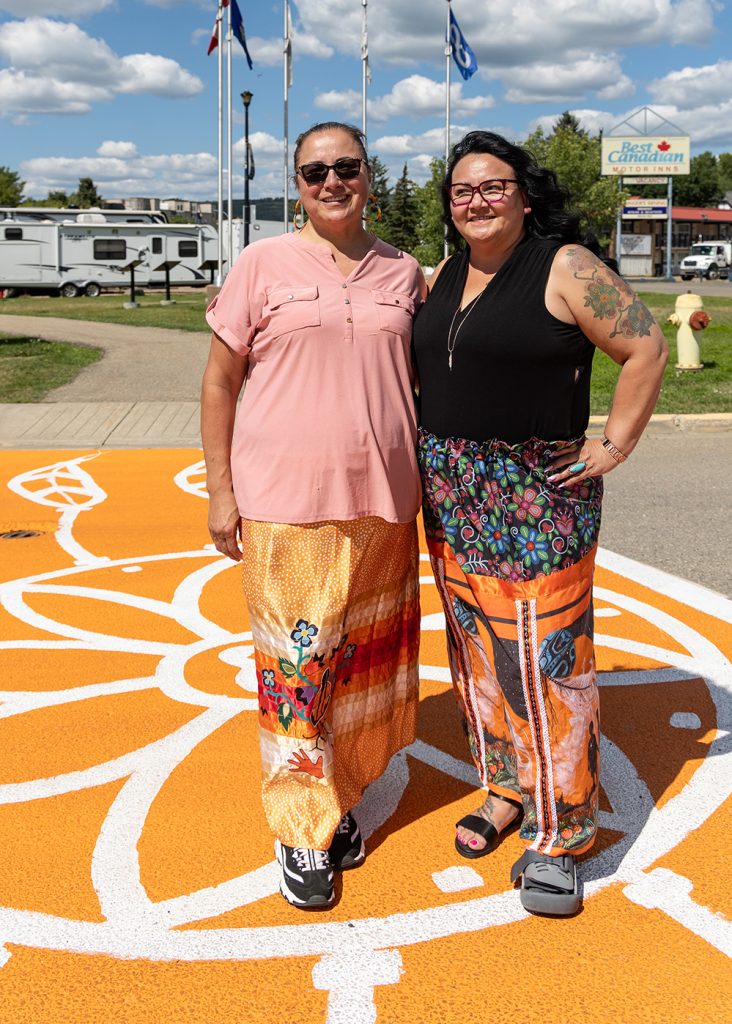
The breathtaking work of Indigenous artist Judy (Jude) Ducharme graces a crosswalk in Peace River each year as a reminder of the trials and tribulations faced by Canadian Indigenous people.
Located appropriately near the Treaty 8 Memorial at Riverfront Park, the artwork will be on display for the entire year to help provide a reminder and help to start the important conversation about the past.
Ducharme says she creates the space each year to help provide a space for healing, learning, and acknowledgement of the residential school crisis in Canada.
“This is meant to be a space for everyone,” says Ducharme.
“It’s meant to provide a sense of healing and that they (survivors) are not alone,” she adds. “Everyone has a connection one way or another to that crisis or trauma, and this creation helps to start the conversation to help work past it.”
Ducharme says she felt the power of healing after she completed the first crosswalk four years ago, that the energy of everyone involved with the creation helps to create something special to help people have a safe place to reflect.
“Whatever I or everyone who helps me puts into the project, that becomes part of the story of the creation,” Ducharme reflects.
“Anyone who is a survivor, anyone who has lost someone to residential schools, they can just sit, and they know it comes from a place of respect.”
Ducharme is the daughter of a residential school survivor, and she’s all too familiar with the ripple effect that occurs through generations. She says it is important to always remember the children we have lost, to know that the survivors live with the memory every day, and that it is vital to keep the conversation going.
“I never choose my designs – even if I have a blank canvas, I never know what I’m going to paint,” expresses Ducharme, adding the Creator provides the idea for the artwork.
“Sunday, I went a little earlier, took off my shoes, and I walked for a little bit and sat at the site to reflect. These images started to pop, each of the designs need to tie into where we come from, we are in Treaty 8 territory, so I wanted something to tie into where we are.”
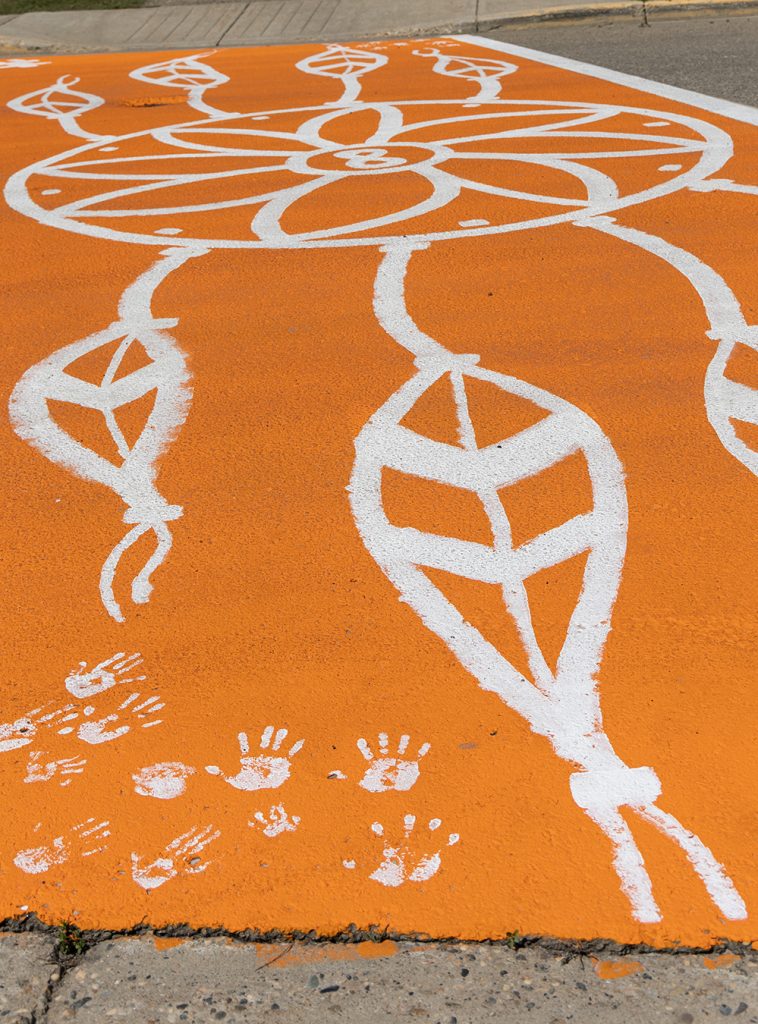
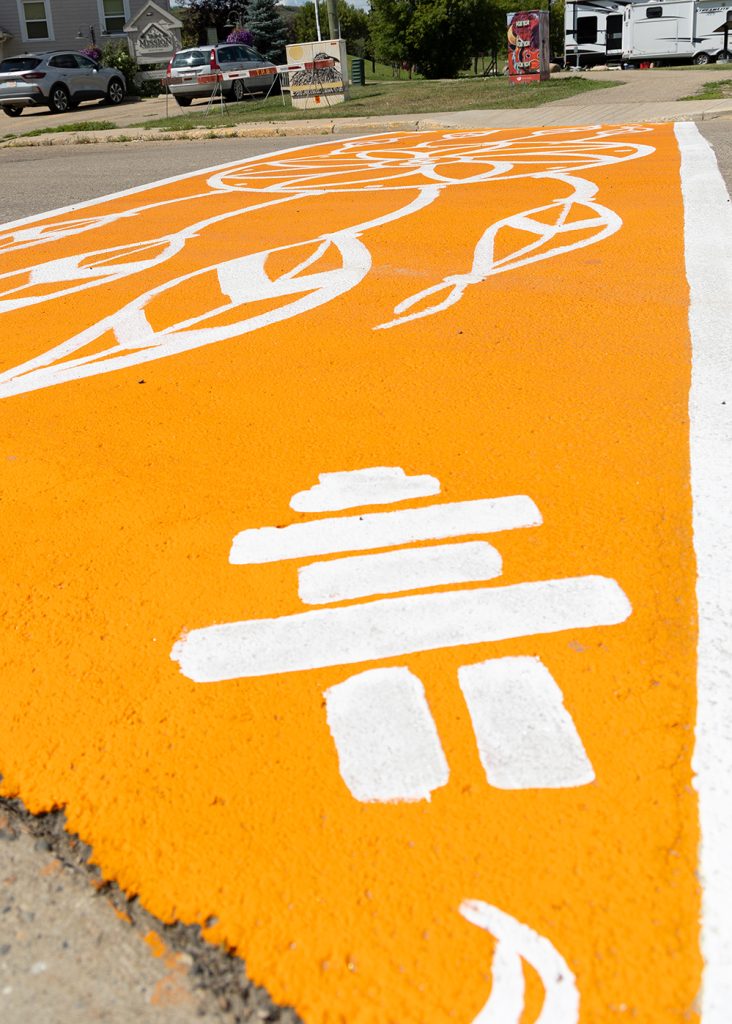
This year’s design features a dreamcatcher with eight Eagle feathers, symbolizing the Treaty 8 territory. It includes the Metis infinity symbol in the centre and inukshuks on opposite corners to honour Inuit people.
“The reason that we have dreamcatchers is all these thoughts and prayers, they go into the dreamcatcher, and the positive thoughts and messages come out through the feathers, that is taken up to the Creator,” she explains.
“I knew I needed something like that to take away the negative thoughts. I wasn’t sure how I was going to lay it out, but I thought about it being a place of gathering for everyone.”
Ducharme adds she used the infinity symbol because it is symbolic for the Métis community and also means forever. She says Elder Priscilla Lalonde asked if she was going to add anything to the corners.
“Initially, I thought I didn’t want to take away from the orange because it’s the main colour for Orange Shirt Day, but as more and more people started to come and started to tell their stories, laughing and crying, I realized they needed to be part of the creation,” she says.
Ducharme says she was touched by the number of people who stopped to question what was happening and what it was for, honked as they drove by, and all those people who helped to paint and do work on the creation.
She adds some of the Peace River Stampeders baseball team also came out to help, bringing their children to learn and help.
Ducharme says she was wondering how to incorporate all the people and their energy into the project.
“I asked if everyone would be comfortable having their hands painted white, so we had everyone paint their hands and leave their hand marks on the painting to add the spirit of each person who attended to finish the creation,” she says.
“All of the people who were part of the day are part of the story, and now they are captured in the creation.”
Toward the end of the painting, an umbrella that was being used to help protect Elder Lalonde from the sunshine flew up and landed on the parking lot of the radio station adjacent to the crosswalk, spreading some of the orange paint onto the surface.
“I decided to grab one of the rollers we were using to paint and created a Métis flower, adding to the creation and expanding it into the parking lot,” she notes.
Ducharme says the creation holds designs that are symbolic of many parts of Indigenous culture. She hopes the creation will help provide a safe place for people to think about the past and help reflect, communicate, and heal.
Ducharme hopes that the annual art she creates will help have a positive impact on the community and the residents who travel the streets each day.
“I believe it encourages conversation so anyone from any walk of life will see the painting and ask the questions,” she says.
“This dark part of Canadian history is still not well-known and having a piece so bright and shared by many, I believe it may help others find a voice to ask questions and learn what it all means.”
The bright, beautiful creation will serve as a reminder to take the time to sit down, have some tea, allow people to talk, and educate future generations about the past.