





Pearl Lorentzen
For South Peace News
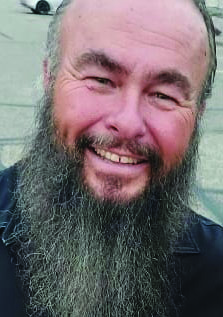
Grant Lacombe is the first District 21 citizens’ representative for the Otipemisiwak Métis Government.
The election occurred Sept. 13-19.
Lacombe was elected with 178 votes. He was running against former Métis Nation of Alberta Region 5 president Bev New, who received 97 votes.
It means 275 MNA citizens voted in District 21. The Métis Nation of Alberta district finder says that the registered MNA citizen population of District 21 is 1,573 people.
Presumably, some are too young to vote, but it appears to be a low voter turnout.
In District 22, Nancy Margaret Cardinal was acclaimed as the citizens’ representative. The registered MNA citizen population of District 21 is 199.
District representatives are similar to a member of the legislative assembly (MLA) or member of parliament (MP).
The MNA elections website says, “Every citizens’ representative is responsible for representing the rights, interests, and claims of the citizens in their respective district in relation to all matters not assigned to their district council and for working with other members of the citizens’ council to advance the purpose, goals, and responsibilities of the Otipemisiwak Me´ tis Government.”
Otipemisiwak MNA has used this word in the name of Otipemisiwak Magazine since 2004. MNA website includes a pronunciation guide – Oh-teh-pim-swak and a definition: “The people who own themselves.”
Otipemisiwak is a Plains Cree word for the Métis people, says the Métis Nation of Ontario’s website.
In 2023, MNA held the first election for the Otipemisiwak Métis Government. It is the most recent step toward self-government for Métis people living in Alberta. The MNA was the first Métis group in Canada to sign a self-government agreement with the governments of Canada and Alberta in 2019.
Under the old system, MNA had five regions. Under the new government, it has 22 districts. Region 5 included Slave Lake, Wabasca, High Prairie, and up to just south of High Level. The more populated portion of this is divided into Districts 21 (Lesser Slave Lake) and 22 (Wabasca), with District 21 also going further south into the Swan Hills all the way to Fox Creek.
District 21 includes Slave Lake, Peavine Métis Settlement, Gift Lake Métis Settlement, McLennan, Kathleen, High Prairie, East Prairie Métis Settlement, Kinuso, Faust, Sunset House Settlement, Swan Hills, and Fox Creek.
District 22 includes Wabasca-Desmarais, Calling Lake, Chipewyan Lake, Peerless Lake, Trout Lake, and Red Earth Creek.
The Otipemisiwak Me´tis Government has three provincial officials and one citizens’ representative for each district. All MNA citizens vote for the provincial officials.
Andrea Sandmaier, from Cold Lake, was elected president with 5,693 votes. She defeated Joseph Pimlott, from Calgary, who received 2,131 votes.
Tai Amy Grauman was acclaimed as the women’s representative.
Rebecca Lavallee was acclaimed as youth representative. The youth representative must be between 18-25 years old.
District captain
Some areas also voted for a district captain. The district captain’s description is long with nine bullet points. It appears to align close to the roles of the former region presidents and vice-presidents. The description is available at www.metiselectionsab.com/candidate_info.
District 21 and 22 took different routes toward electing a district captain.
Regan Auger was acclaimed as the District 22 captain.
District 21 has an inter-district captain.
In both the old and new system, the MNA has locals. Region 5 had two locals – Slave Lake and Wabasca. Only the Slave Lake one is part of District 21.
Shane Combs is the president of the Slave Lake Métis Local. He is interim-district captain for District 21. He works full-time, so local vice-president Susan Cunningham is helping him out.
“We’re just trying to get our bylaws sorted out,” says Combs. They are working with the legal department at the MNA main office to “make sure it falls in line with the constitution, and then we’ll have a vote with the local to ratify it.”
Outgoing Region 5 president Elmer Gullion and vice-president Hilda Lambert left a plan for events and services through Christmas, adds Combs. The Region 5 staff will also remain.
The Region 5 office is in Slave Lake and provides programs and support for people in Slave Lake, High Prairie, Wabasca, and surrounding areas. Staff include the executive director, youth worker, environmental consultation, and others.
Each district elects a captain and councillors.
“The district can have more than three (councillors),” says Combs, “but a minimum of three according to the bylaws.”
The district council election will be done after the bylaws have been ratified.
Within the new system, there is also space for the Slave Lake local to continue and others to be formed. The locals are run by volunteers.
General election information
The Opitemisiwak Métis Government election was for the following officials: citizens’ representative, district captain, women’s representative, youth representative, and president. All are four-year elected positions, with an annual salary, says www.metiselectionsab.com/candidate_info. The president receives an annual salary of $170,00 plus travel expenses. The rest have an annual salary of $90,000 plus travel expenses.
If a citizens’ representative is appointed to cabinet they receive an annual cabinet stipend.
The Otipemisiwak Métis Government was elected by citizens of the Métis Nation of Alberta. The election was held Sept. 13-19. In person, online and mail in ballots were accepted.
District 21 in-person voting was in Slave Lake and High Prairie on Sept. 17 from 8 a.m. to 8 p.m.
District 22 in-person voting was in Wabasca on Sept. 19 from 8 a.m. to 8 p.m. As both the District 22 district representative and district captain were acclaimed, people were voting for the president only.
Métis people can be both an MNA citizen and a member of a Métis settlement.
District 21 has three Métis settlements – Peavine, Gift Lake, and East Prairie.
