





South Peace News presents a series of question-and-answer features from elected local government leaders to explain goals and issues in the coming year.
School division board chairs were asked a series of questions.
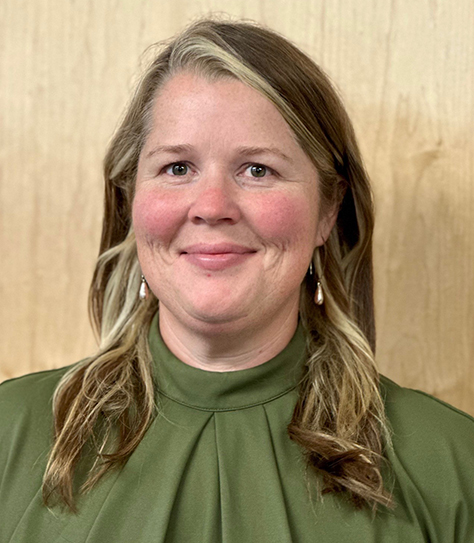
Anita Anctil has served as the board chair of Conseil scolaire du Nord-Ouest since May 2025.
Question 1 – Looking ahead to 2026, what do you want to see accomplished, why and how?
Anctil – Our vision for 2026 is clear – to strengthen French-language education across northwestern Alberta and ensure eligible families know they have this opportunity.
Right now, depending on the community, we are reaching only 10-45 per cent of eligible students.
That means hundreds of children who have the constitutional right to French education aren’t accessing it – often simply because families don’t know it’s available or don’t understand its significance.
We achieve this through strong board governance and advocacy, targeted outreach, strong community partnerships and innovative programming that reflects our northern realities.
We’re also in the planning phase to expand services – currently conducting feasibility studies in Slave Lake and High Level.
This isn’t just about enrolment numbers.
It’s about preserving language, culture and identity for the next generation.
Question 2 – What are the top priorities, projects, issues?
Anctil – Our priorities centre on student success, sustainability and growth.
First is ensuring every student has access to quality programming and can thrive academically, culturally, socially and emotionally in safe, welcoming environments.
That requires recruiting and retaining exceptional staff – which is increasingly challenging in rural northern communities.
Second is retention in enrolment.
We serve francophone education rights holders under Section 23 of the Charter.
Many eligible families don’t know their children qualify or underestimate the advantages of francophone education.
Reaching these families is essential to our future.
Third is financial sustainability. We operate schools across a vast territory with unique mandates and rising costs.
Question 3 – What are the key things to move the school division forward to be sustainable and grow in the future?
Anctil – Sustainability and growth require vision, resources, relationships and adaptability.
We need clear strategic direction as well as stable funding that recognizes the unique costs of operating small francophone schools in northern Alberta.
Strong partnerships are vital across all levels – with families, community organizations, such as the Association canadienne-francaise de l’Alberta (ACFA), municipalities and the provincial government.
We also need flexibility, as what works in Peace River may not work in Falher or Grande Prairie.
Technology helps bridge distances, but there’s no substitute for responsive community-centred programming.
Question 4 – What are the biggest challenges facing the school division in a northern rural region with stagnant or declining population and enrolment and how will the division overcome them?
Anctil – The challenges are real – geographic isolation, rising costs and acute workforce shortages.
In addition, our small K-12 francophone schools are mandated to offer complete and equivalent programming, which presents unique complexities and challenges.
We’re advocating strongly for provincial recognition of these realities.
Northern francophone education can’t be delivered using urban models.
Meanwhile, we’re getting creative – leveraging technology, sharing services where possible and focusing on the quality and distinctiveness of our programs.
When parents understand what French-language education offers – true bilingualism, cultural richness, strong outcomes – they choose us.
Our 100 per cent high school completion rate proves we’re doing something right
Question 5 – What is the most challenging things about your role as board chair?
Anctil – The toughest part is balancing competing priorities with limited resources.
How do we maintain services across the communities when budgets are tight?
These aren’t easy calls.
There’s also the geographic reality. Our communities are widely dispersed, each with distinct needs. Ensuring every voice is heard requires constant effort and genuine listening.
Finally, there is the dual focus: strategic long-term planning while addressing immediate pressures.
You can’t sacrifice tomorrow for today, or today for tomorrow.
Finding that balance is ongoing.
Question 6 – What are some of the biggest challenges the school division faced in 2025?
Anctil – Last year, 2025, was a year of transition and pressure.
Financial constraints squeezed operations.
Workforce shortages and delivering high-quality programming with limited resources requires constant creativity.
We also experienced significant leadership transitions.
A new superintendent was appointed in August.
Then in October, three new trustees were elected, fundamentally reshaping board leadership and governance.
Question 7– What was the most unexpected thing the school division had to deal with in 2025?
Anctil – Two things caught us off guard.
The provincial teachers’ strike in fall 2025 created uncertainty for students and families.
We worked closely with staff and parents to minimize disruption.
But these situations are never easy – especially in small communities where relationships are personal.
We also experienced the loss of a cherished community member.
In a tight-knit school community, these losses are felt deeply.
Supporting our school families through grief while maintaining operations required sensitivity, resilience and compassion.
Both reminded us that education is just about curriculum and budgets – it’s fundamentally about people and community.
Question 8– Any other comments to add?
Anctil – I want people to understand what’s at stake.
Francophone education in northern Alberta isn’t a luxury – it’s a constitutional right and a community lifeline.
For more than 30 years, parents and educators have fought to build and sustain these schools.
The mobilization that created Ecole Heritage in Falher, Ecole des Quatre-Vents in Peace River and Ecole Nouvelle Frontiere in Grande Prairie, the advocacy for quality facilities, the daily work of keeping French alive – this is about identity, belonging and opportunity.
When a child graduates truly bilingual, confident in their francophone identity and equipped for success – that’s a victory not just for one family, but for an entire community and culture.
We’re not just running schools.
We’re preserving a heritage and building a future.