




Pearl Lorentzen
For South Peace News
Many people have likely attended the Smith-Hondo Fall Fair or the Kinuso Canada Day events. What they might not realize is that the societies which organize these are part of a long tradition of agricultural societies in Alberta.
In 1879, the first agricultural society was formed in what is now Alberta, says the Alberta Association of Agricultural Societies (AAAS) website.
This was before Alberta was a province, says Tim Carons CEO of the AAAS.
Alberta became province on Sept. 1, 1905.
“Agricultural societies are one of the best kept secrets in Alberta,” says Carons.
He adds the 284 primary (the type that we have in our area) ag societies run around 34,000 events each year, which spend about a billion dollars.
“They are a big deal,” he adds.
The events mentioned at the beginning of this article are organized by the Central Slave Lake Agricultural Society (aka Kinuso Ag Society) established in 1973 and Smith-Hondo Association of Recreational and Agricultural Society (SHARA) established 1980.
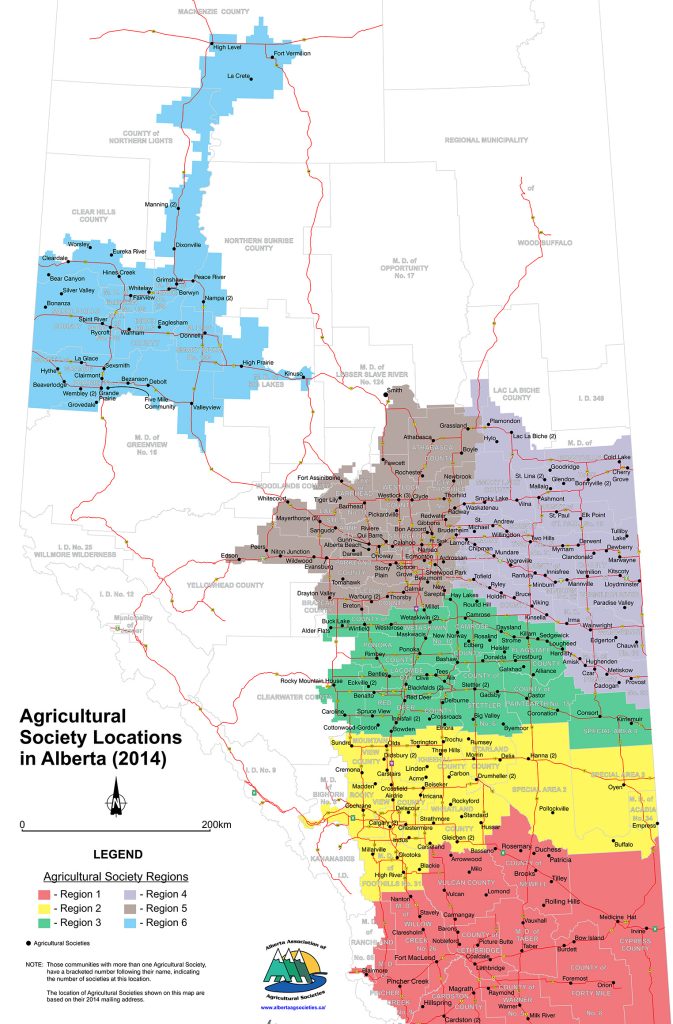
In total, Alberta has 291 ag societies from Acme and District Agricultural Society to Yellowhead Ag Society. These are divided into regional (seven including Grande Prairie) and primary (all the rest, which is 284).
These categories refer to the Government of Alberta’s funding model.
“The system to classify and fund regional and primary agricultural societies has been in place since the late 1990s,” says Jessi Rampton, press secretary with the Alberta Ministry of Agriculture and Irrigation. “Classification and funding was developed according to the size of fair each society held, which was determined by prize money paid out and gate receipts.
“So much has changed,” says Carons, since these designations were established, adding, “what hasn’t changed is the value of ag societies.”
In 2024-25, the Government of Alberta provided $11.5 million to the Agricultural Societies Grant Program, says the news release. Of this $2.8 million went to the seven regional societies. The other $8.67 million was divided by the 284 primary ag societies, says Caron, which works out to a lot less per society.
Primary ag societies own and run almost 900 buildings in Alberta, says Carons.
The mandate of all ag societies is to improve agriculture and provide recreation for their communities. How this is done varies.
“It is truly based on the needs of the community,” says Carons.
This is true of the local ones. Kinuso owns and runs the Kinuso Ag Hall. This includes a curling rink, skating rink, and community hall. It also organizes league and bonspiel curling, a Christmas market, Canada Day Parade, bingo, and more. The fall fair has only been reintroduced in the last two years.
In Smith, SHARA’s biggest event is the fall fair, which includes a parade, rodeo, bench show, dinner, dance, etc. SHARA runs the Smith Community Complex, which includes a hall, outdoor rodeo grounds, indoor riding arena, and outdoor ice rink. This is owned by the M.D. of Lesser Slave River. SHARA also offers programs throughout the year, including horse riding clinics.
The High Prairie Ag Society was founded in 1911.
Peace River and Smoky River near Falher each have busy and vibrant agriculture societies as well.