




South Peace News presents a series of question-and-answer features from elected local government leaders to explain goals and issues in the coming year.
School division board chairs were asked a series of questions.
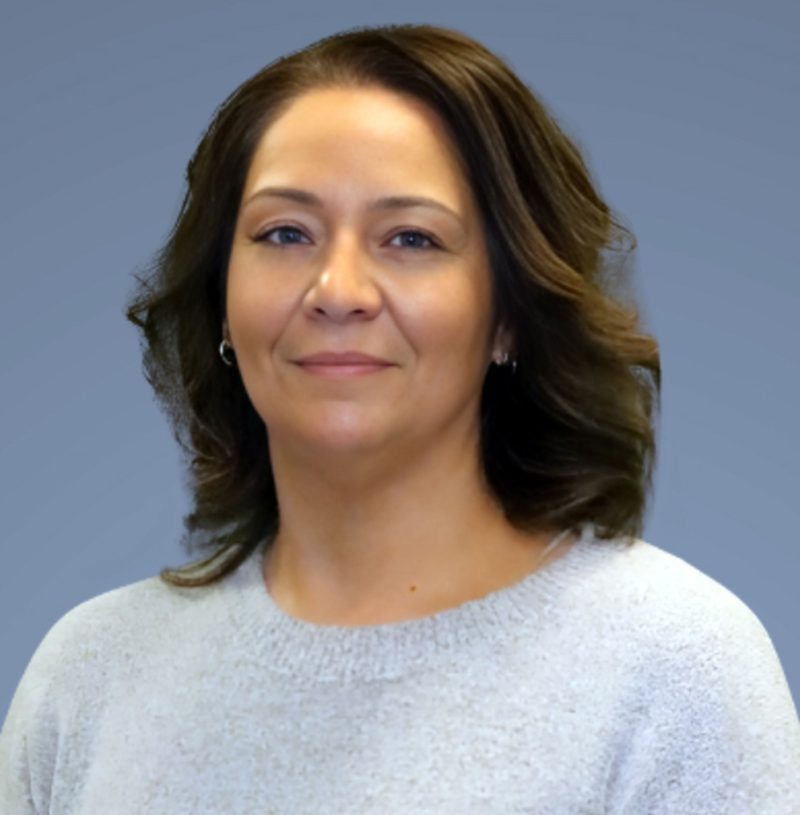
Tanya Fayant has served as the board chair of Northland School Division since September 2024.
Question 1 – Looking ahead to 2026, what do you want to see accomplished, why and how?
Fayant – Looking ahead to 2026, Northland School Division remains focused on advancing truth and reconciliation, strengthening student achievement and expanding opportunity.
The 2025-2028 Northland education plan was reshaped through division-wide community engagements in 2023-2024 and 2024-2025.
Families, Elders, Knowledge Keepers, staff and students identified language revitalization, land-based learning, academic growth and students connection as priorities.
Northland will continue hosting engagements in each school community to guide progress and refine planning.
Strengthening literacy and numeracy, expanding collegiate and dual-credit pathways and supporting continued growth of Northland Online School remain key goals.
Infrastructure renewal also remains critical, particularly for aging facilities in several communities.
Through steady governance, active advocacy and strong partnerships, Northland continues building long-term stability and opportunity.
The direction remains clear: Children First.
Question 2 – What are the top priorities, projects, issues?
Fayant – Northland’s top priorities are guided by the 2025-2028 Northland Education Plan and the feedback shared during community engagements.
A central focus is advancing truth and reconciliation through Indigenous language revitalization and expanded land-based learning.
Northland is advocating for a letter of authority that would allow Nation-endorsed language instructors to teach with fair grid-aligned compensation.
The board meets regularly with the superintendent’s Elder and Knowledge Keeper Advisory Council and Youth Council so community voice remains central to planning and direction.
Community feedback also highlighted the importance of student connection and team sports.
Northland responded by organizing division-wide events such as the Moose Cup Floor Hockey Challenge and Basketball Palooza.
A learning coach for physical literacy and athletics supports these initiatives and strengthens physical education programming.
Infrastructure renewal remains a significant issue, particularly for Grouard Northland School, Prairie Paddle School and Elizabeth School in Cold Lake.
Question 3 – What are the key things to move the school division forward to be sustainable and grow in the future?
Fayant – Sustainability requires innovation, responsible planning and strong partnerships.
Northland Online School demonstrates that adaptability,
Enrolment has reach 241 students, including 60 dual-enrolment students.
Summer school programming expanded awareness across Alberta and strengthened graduation pathways.
Collegiate programming continues to grow, providing hands-on pathways in trades, health care and education that reflect workforce needs and community feedback.
Northland has met with MLAs, the Indigenous relations minister and the mental health and addictions minister to advance infrastructure renewal, Indigenous language revitalization and community wellness priorities.
Growth is measured not only in enrolment, but in stronger outcomes, expanded opportunity and long-term stability grounded in community voice.
Question 4 – What are the biggest challenges facing the school division in a northern rural region with stagnant or declining population and enrolment and how will the division overcome them?
Fayant – Operating in a northern rural region brings challenges related to geography, recruitment and infrastructure.
Distance impacts transportation and access to specialized services.
Aging facilities in some communities require renewal.
Northland addresses these challenges through careful budgeting, infrastructure planning and active advocacy.
Investments in transportation, housing and communications systems support stable operations.
Recruitment requires persistence and flexibility.
Northland continues advocating for policy adjustments that would allow retired teachers to work full time without pension penalties and reviewing northern allowance eligibility in specific communities.
Innovation also plays a role.
Northland Online School expands access beyond geography and collegiate programming brings career pathways directly into communities.
By combining advocacy, innovation and responsible governance, Northland continues building long-term stability.
Question 5 – What is the most challenging things about your role as board chair?
Fayant – One of the most challenging aspects of serving as board chair is honouring community voices while maintaining strong governance responsibilities.
Cultural responsiveness, fiscal accountability and long-term planning must move forward together.
Trustees represent individual communities, but decisions must support the entire division.
Balancing local priorities with division-wide responsibility requires thoughtful discussion and careful stewardship.
Navigating provincial funding changes and policy adjustments also requires persistence and relationship building.
This balance between listening deeply and governing responsibly defines the role.
Question 6 – What are some of the biggest challenges the school division faced in 2025?
Fayant – In 2025, Northland experienced staffing disruptions, budget pressures and infrastructure realities while protecting classroom programming and student supports.
Communities also faced moments of crisis, including the Chipewyan wildfire.
Reopening the school required flexibility, co-ordination and strong relationships to support students and families during a difficult time.
Rapid technological change also required attention.
The expansion of artificial intelligence (AI) tools prompted policy review and professional learning to support responsible classroom use.
These experiences reinforced the importance of adaptability and strong relationships across northern communities.
Question 7– What was the most unexpected thing the school division had to deal with in 2025?
Fayant – The pace of technological change, particularly the rapid expansion of AI tools, was one of the most unexpected developments in 2025.
These tools became widely accessible to students quickly, requiring thoughtful review of classroom practices and academic integrity expectations.
At the same time, staffing disruptions and communities in crisis reminded Northland that flexibility and strong relationships are essential in northern education.
Unexpected challenges reinforced the importance of steady leadership and responsive governance.
Question 8– Any other comments to add?
Fayant – Education within Northland School Division is part of a broader journey of healing, reclamation and empowerment.
Students must be academically prepared while also grounded in who they are as Indigenous young people.
Truth and reconciliation, language revitalization and land-based learning remain central to that work.
At the same time, Northland continues expanding flexible learning pathways, collegiate programming and student engagement opportunities.
As board chair, I remain committed to advancing governance that is accountable, culturally grounded and future-focused.
The work being done today matters deeply to the communities Northland serves and to the generations still to come.