





Richard Froese
South Peace News
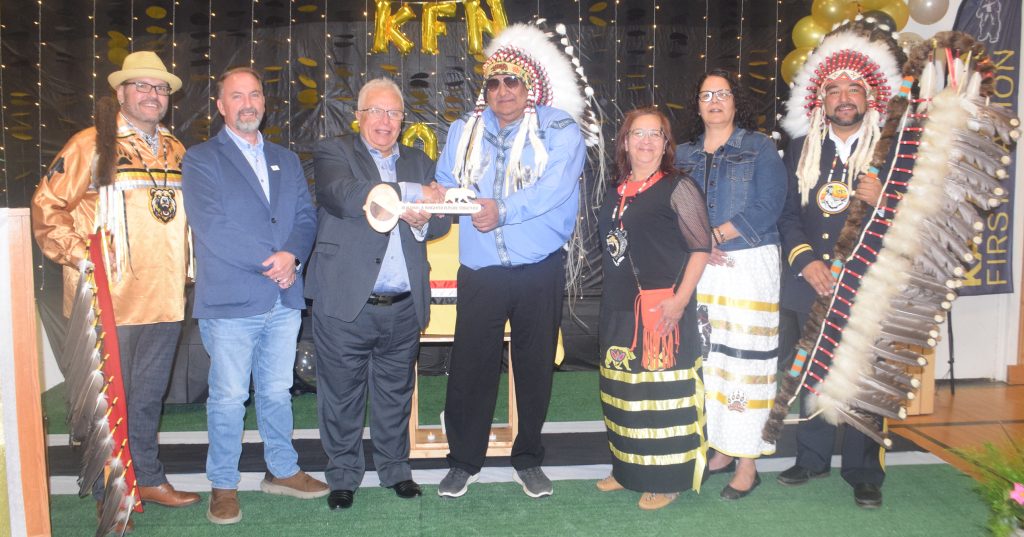
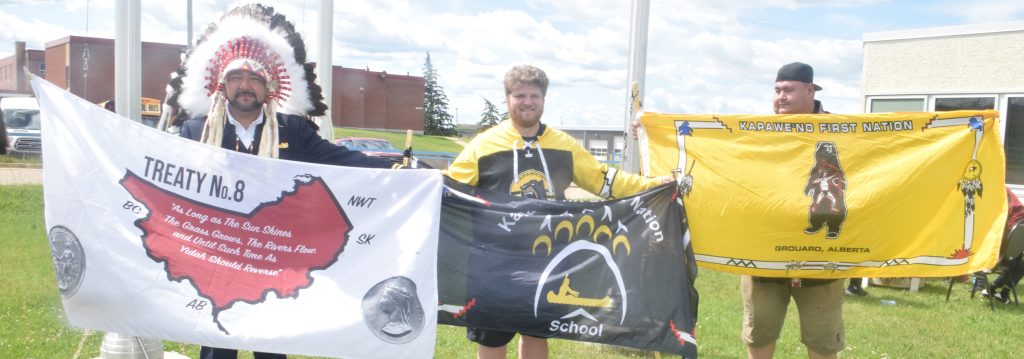
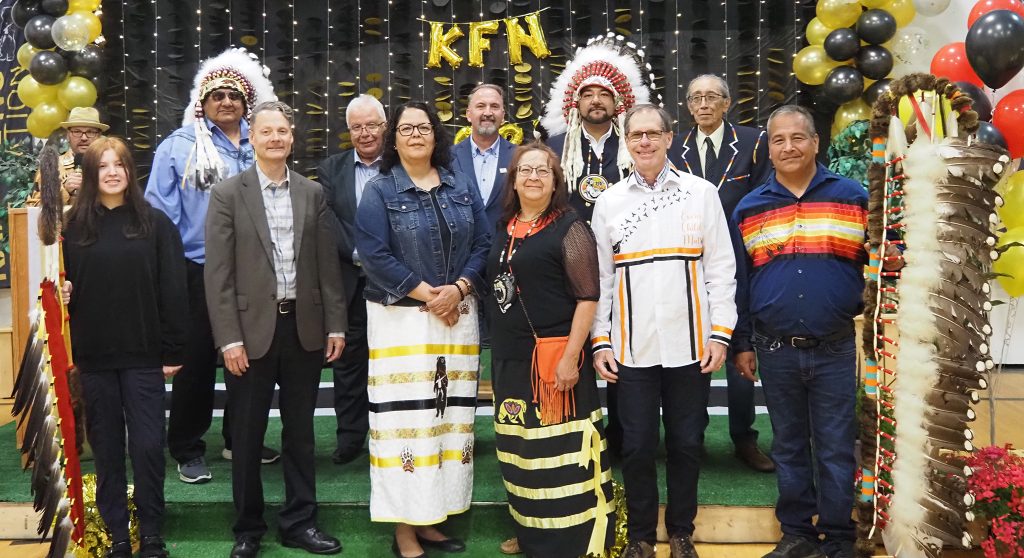
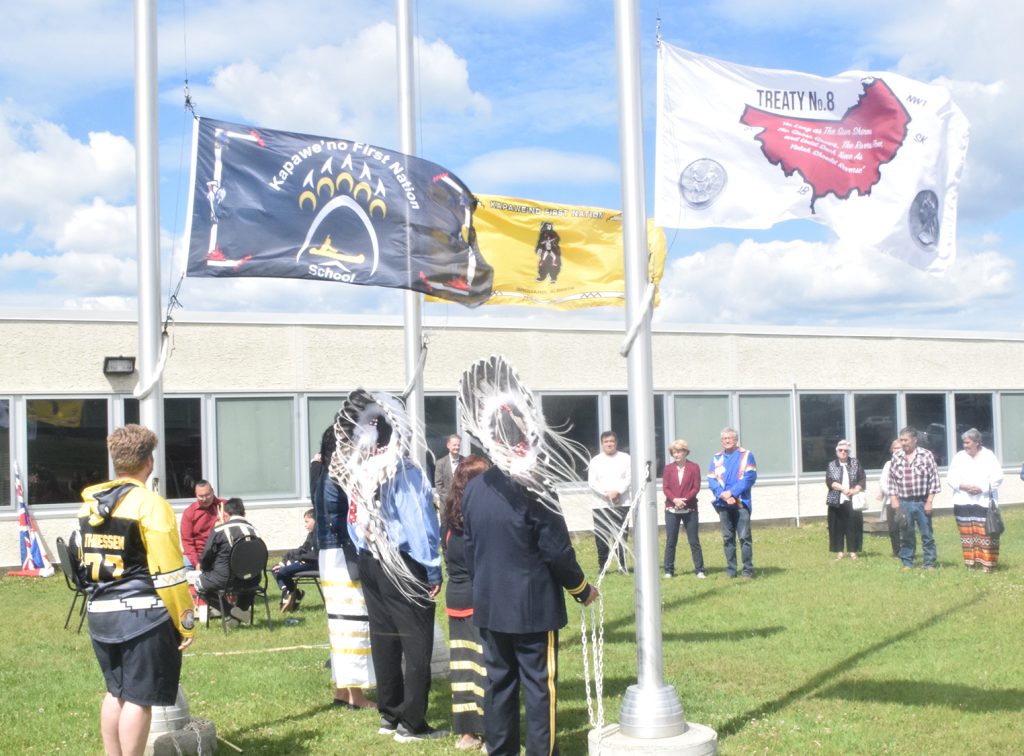
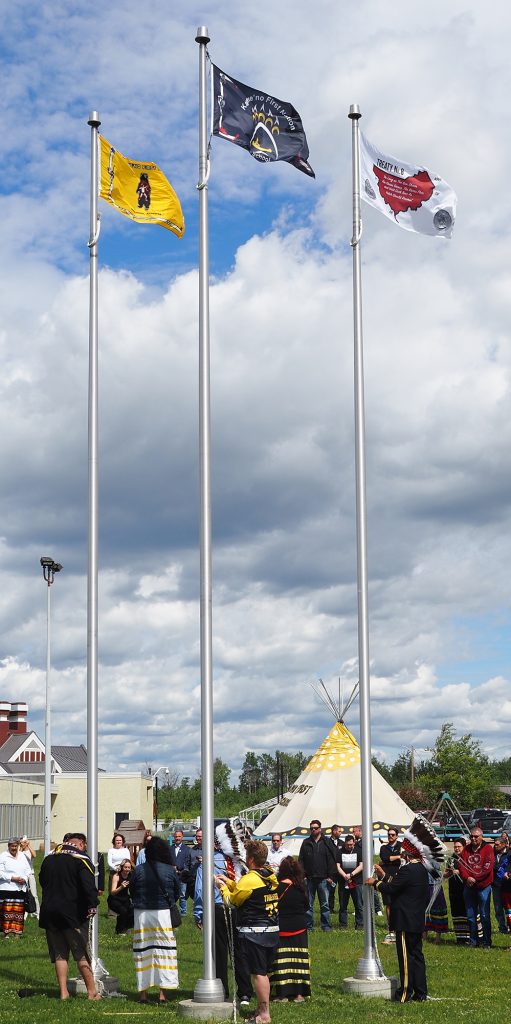
Kapawe’no First Nation completed the purchase of the Grouard campus of Northern Lakes College on July 2 and held a special celebration July 7 to mark the occasion.
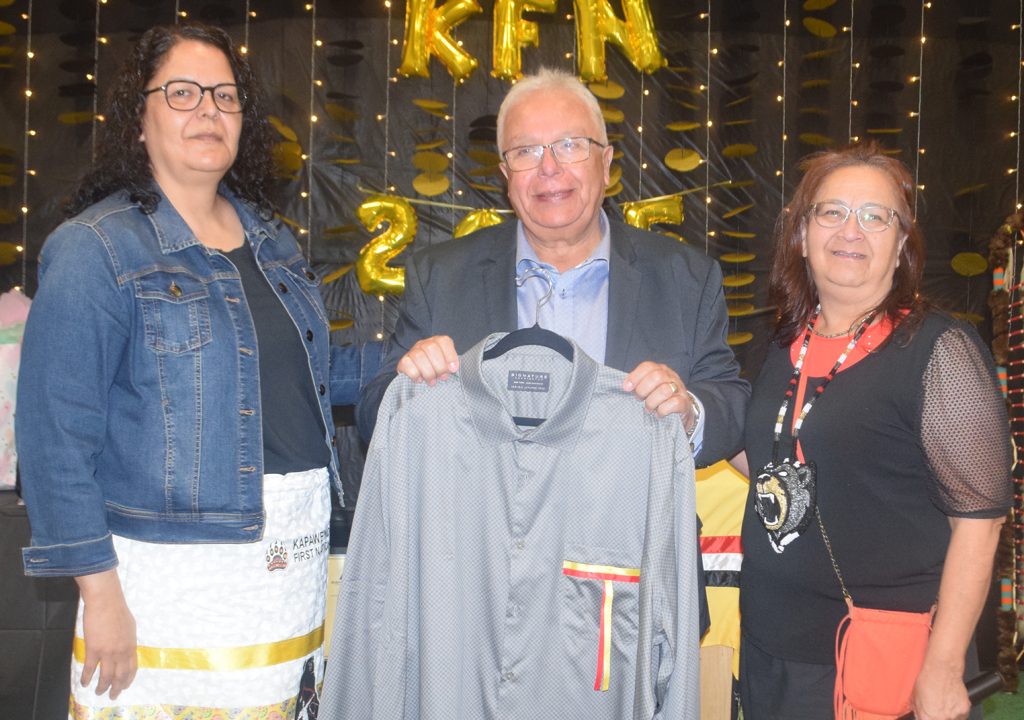
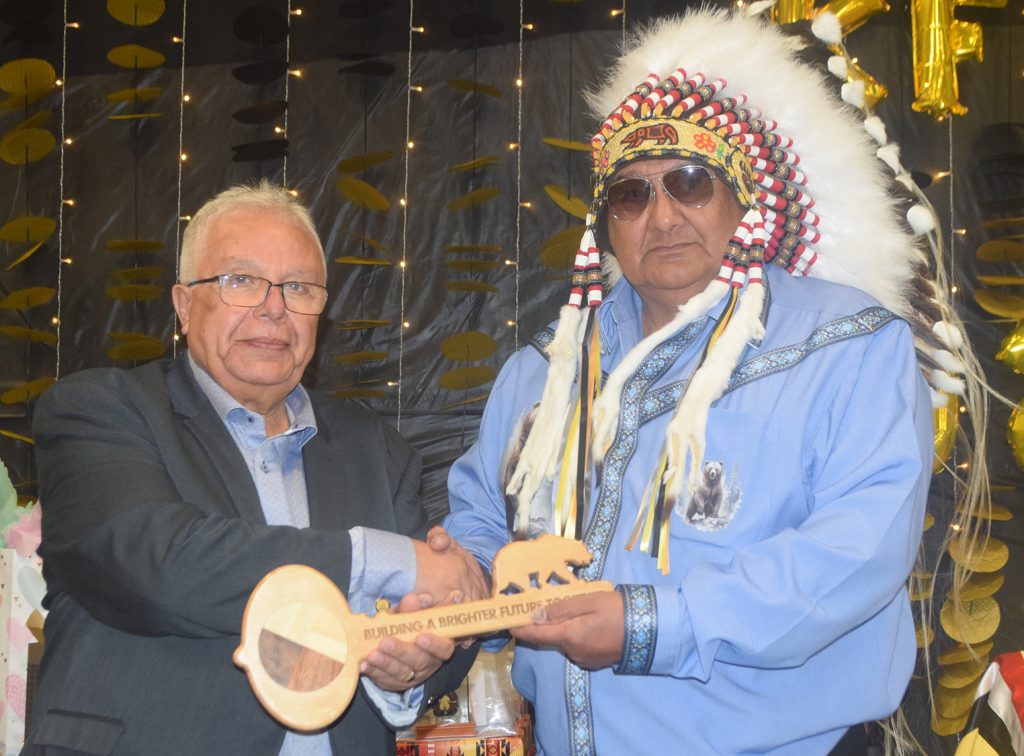
Kapawe’no received a ceremonial key from the college at the newly-acquired facility, housing and lands, says a Kapawe’no news release.
Buying the property addresses the need for lifelong learning, fostering a continual knowledge growth and expanding trades and commerce, business and land development.
It also broadens the Nation’s land base adjacent to the existing territory.
Hereditary Chief Sydney L. Halcrow shared the vision in his opening speech.
“Our first priority is our nêhiyawêwin (Cree language) as an essential stride, followed by English and then French,” Halcrow says.
“This acquisition marks a new chapter in our Nation – we are committed to fostering growth in learning our nêhiyawêwin and nêhiyawak pimachimo- win (Cree way of life), along with expanding our business capabilities.”
All agree the purchase is a step forward for Kapawe’no First Nation and the college, giving both a future toward lifelong learning and business development.
Kapawe’no First Nation Collegiate, as the main lease holder of the facility, integrates cultural learning with Alberta’s educational standards focusing on the Cree language, self- knowledge, arts, sciences and sports.
Through four pillar schools – Kapawe’no School (K-6), Buffalo Bay Academy (Grades 7-12), First Nation Virtual Learning Centre and the Outreach/Adult Learning Centre – students receive a balanced curriculum that honours their way of life while preparing them academically.
The sports academy offers competitive sports for Grades 7-12 and developmental programs for younger children, promoting a healthy blend of academics and athletics.
NLC board chair Barry Sharkawi says the new Kapawe’no campus has great potential.
“Today, we hand over the key to you,” Sharkawi says.
“This sale marks history for us and for you – two separate learning centres, two different missions, crossing paths, moments of change and a promising future.”
He wished Kapawe’no all the best in the future.
“May this space continue to be filled with life, learning and hope for generations.”
NLC president Glenn Mitchell says the transition is a big step for both parties.
“It’s a monumental day – the end of one era and the start of another,” Mitchell says.
“It’s a good collaboration.”
Treaty 8 Grand Chief Trevor Mercredi commends Kapawe’no for leading the way in building its community and culture.
“I am honoured to attend Kapawe’no First Nation’s historic move in lifelong learning and land development rooted in sovereignty and self-determination,” Mecredi says.
Sucker Creek First Nation Councillor Jim Badger says the transfer will have a lasting impact.
“Today is a great day, a day that will be remembered for a long time,” says Badger, former longtime chief of Sucker Creek.
“It’s a long time coming.”
Special congratulations and support was expressed by neighbouring municipalities.
Big Lakes County Councillor Jeff Chalifoux, who represents Grouard, congratulated the buyers.
“On behalf of council, we want to work with you,” says Chalifoux.
Town of High Prairie Mayor Brian Panasiuk wished Kapawe’no all the best for in the future.
“I’m excited about all the opportunities,” he says.
“It’s going to be great for the community.”
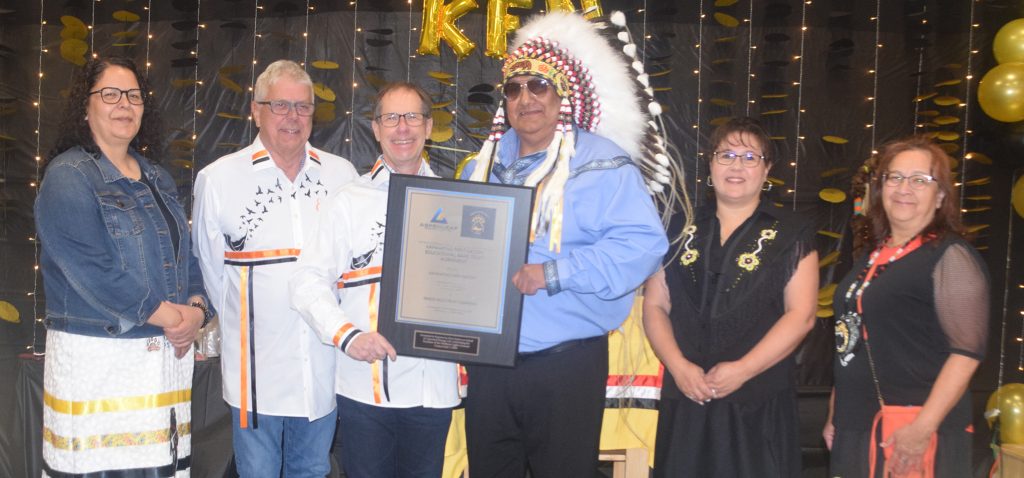
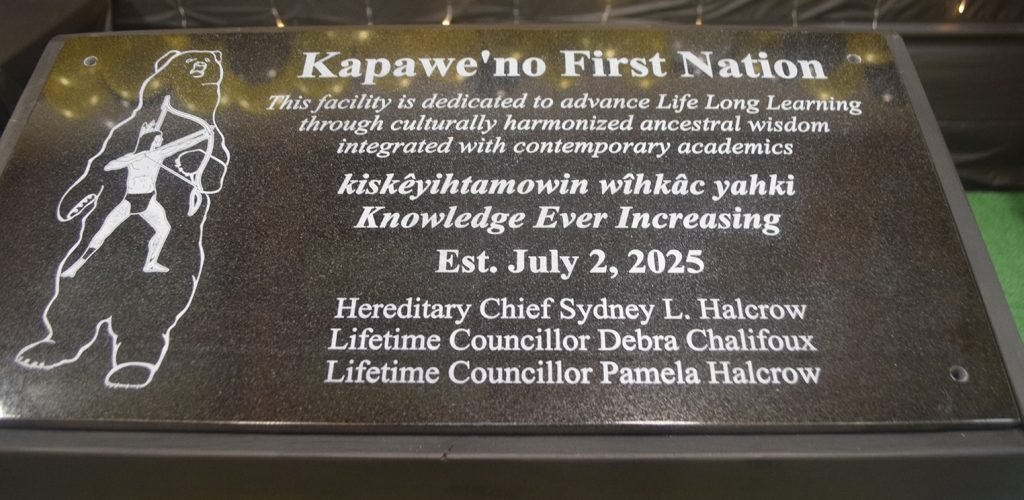
A plaque was unveiled to mark the day Northern Lakes College announced the disposition of the Grouard campus to Kapawe’no First Nation. The approval was authorized through a Ministerial Order by the Government of Alberta set out in the Real Estate Property Governance Act 2024 and the Post-Secondary Learning Act.
Nestled within the ancestral lands of the Kapawe’no First Nation, the new acquisition campus and lands are alongside Buffalo Bay, connecting the waters of Lesser Slave Lake with Buffalo Bay, located 29 km from High Prairie.
The Trans-Canada Trail traverses Kapawe’no territory between the lake and the Nation. The area served as a meeting place for ancestors for hundreds of years, Ko-pow eenoo-uk (Kapawe’no) ‘people coming ashore’.


HOW much did these buildings and land cost, or was it another gift?