



Chris Clegg
South Peace News
High Prairie town council is exploring ways to help a High Prairie apartment building owner lower his tax bill.
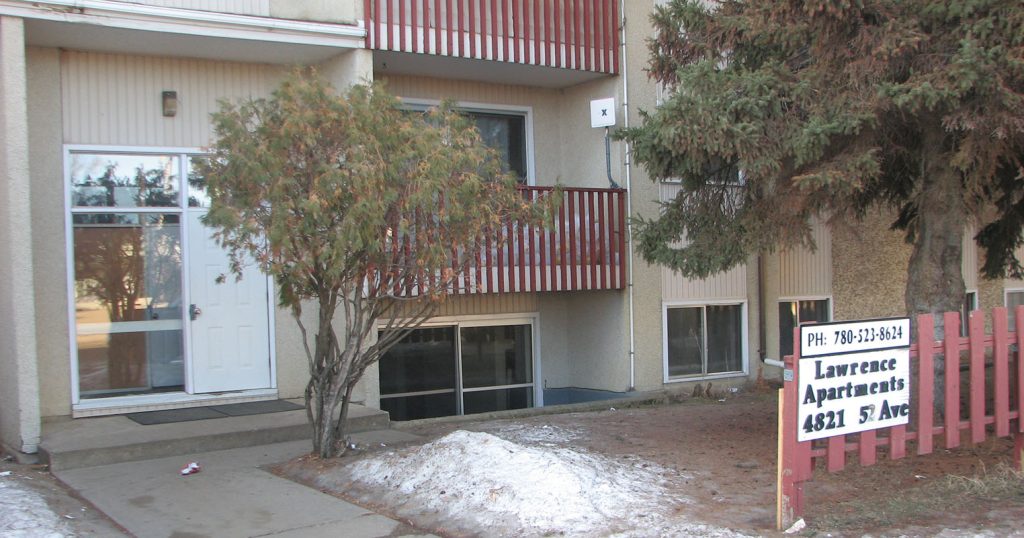
Council agreed at its March 12 meeting to direct administration to confirm the numbers regarding the tax bill at Lawrence Apartments, and to contact its assessor to advise on the process with the intention of having a new assessment completed.
Cameron Munro, representing CTM Realty AB Inc., appeared before town council at its Feb. 25 meeting to explain his financial plight at Lawrence Apartments. Munro is asking for help to alleviate the financial pressures he faces operating the facility. Specifically, Munro requested council to consider giving him a 36-month tax forgiveness or credit.
At the Feb. 25 meeting, Munro told council that taxes have risen 43 per cent since the last assessment making it increasingly difficult to operate. The assessment resulted in a $10,000 annual increase in taxes, Munro said, but council later heard from CAO David Joy it was closer to $15,000.
Councillor Judy Stenhouse asked why Munro’s tax bill would rise so high when council approved a two per cent increase. His bill increased 80 per cent overall arising to the question of an accurate tax assessment.
“You’re correct,” said Councillor John Dunn.
“The numbers are way off. Something needs to be checked out.”
It is the property owner’s responsibility however, to appeal the assessment if he feels it is not accurate.
Councillor James Waikle did not oppose the idea but wanted to ensure the proper process was followed. Stenhouse allowed her motion to be amended to include asking the assessor to advise on the proper process, rather than completing a new assessment on the property.
At the Feb. 25 meeting, Munro outlined other reasons for his difficulties.
“We do have a cap on our rents and no ability to raise (rent),” he added, due to regulated cap rents on the building’s mortgage conditions.
Therefore, the reason for the tax forgiveness request was simple.
“. . .be able to sustain affordability of this building.”
That, because the building’s net operating income has dropped below zero, threatening long-term viability.
Added repair costs (many windows, kitchens, bathtubs and sinks date back to 1973) add other costs.
“We’re a small company,” said Munro. “(We have a) passion for affordable housing.”
Munro told council he has spoken to other apartment owners in town (Green Acres and Aspen Court) who share similar concerns, specifically about ongoing crime. He cited examples including break-ins, and windows being smashed in vehicles and in the building.
“It creates a very unsafe environment for our tenants,” he added.
Other criminal activity at the apartment included arson-related dumpster fires, vandalism (a bicycle being thrown through the front lobby window), keys were stolen and the breaker flipped casing the boiler to shut down and costly repairs.
Joy wrote in his report to council there are drawbacks to providing the relief.
“The dilemma for council is that if tax forgiveness is approved, then the Town’s property owners and businesses will experience an additional increase in their property taxes to compensate.
“If council forgives this particular apartment building, then the landlords of the other apartments or condo buildings will demand equal treatment and seek similar tax forgiveness,” wrote Joy.