Kate Lovsin,
Watershed Coordinator,
Big Lakes County ALUS Coordinator,
Lesser Slave Watershed Council.
Alberta finds itself in a multi-year drought.
What is drought? It is a pattern of dry weather over a period, leading to water shortages. It is important to remember that drought looks different across the province. Here in the north, we are seeing lake levels below average and low flows in our rivers and streams, whereas in the south, there is talk of turning off the taps for water license holders and major impacts for the irrigation districts.
Drought is an ongoing problem that the Government of Alberta is working to address through a multi-step plan. Currently, they are in stage 4 of 5 for the water shortage management plan.
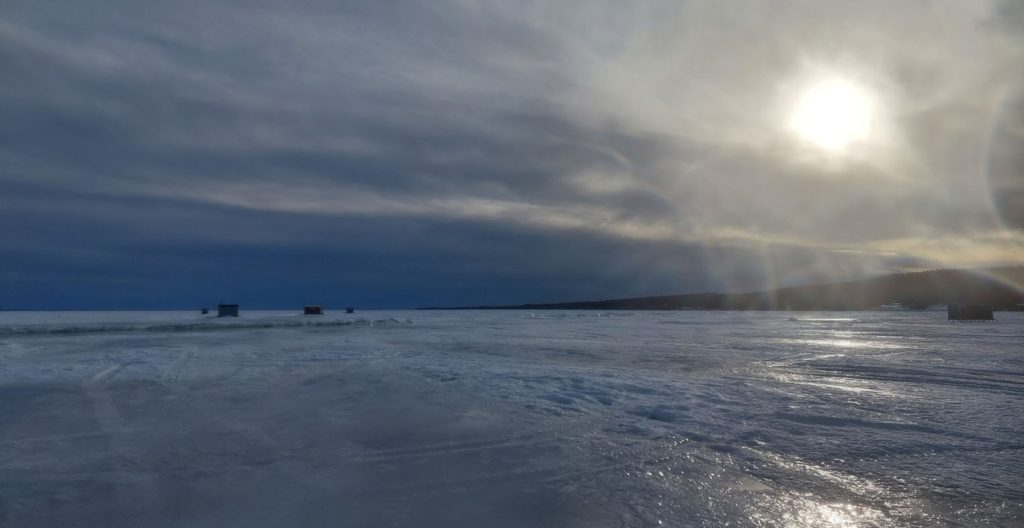
Drought isn’t just a summer condition. This year’s winter season shows the impacts we should expect for the coming growing season, with minimal snowfall through November and December, more freezing rain and below 0C days.
Our watershed is precipitation fed, which means that it gets its water from rain and snowfall, not from glaciers like most others. When we look at the Alberta moisture maps, it is a stark example of how little precipitation there has been over the last several months and years. With less snowpack heading into spring, we have less snowmelt which is what fills our rivers, and in turn, our lake.
With warmer weather coming sooner in the year like this past May (+40C weather), we experience more evaporation and water loss across the board. That’s why it is so important to do work now to keep water on the landscape and help to make the watershed more resilient. By doing things on the landscape that protect water and minimize risk, we can ease the drought situation until the climate shifts away from dry conditions.
Luckily, some of this work also benefits us when there is extreme moisture like floods! Unfortunately, many landowners have been degrading the watershed by removing and draining wetlands, which act as water storage powerhouses. With society losing wetland areas at a rapid rate, the land can’t keep up with precipitation, either in excess or in small amounts. By keeping wetlands and riparian areas healthy, we actively contribute to habitat, water retention efforts, and carbon capture and storage.
Specifically in the Lesser Slave Watershed, we are hearing concerns about lake levels. This spring, Buffalo Bay, a critical fish spawning zone, had much less water than the previous year. We need to work to conserve and protect our freshwater supplies until a time when precipitation is more abundant.
The Lesser Slave Watershed Council is lucky enough to be partnering with the Mighty Peace Watershed Alliance to host a Municipal Drought Workshop in Grande Prairie for local municipalities to start thinking about drought on a larger scale. Check out the event at https://www.mightypeacewatershedalliance.org/!
As always, if you have any questions about something water related, give us a shout! We are happy to hear concerns, share resources, and more! Stop by the office in High Prairie, call (780) 523-9800, or email info@lswc.ca.