Richard Froese
South Peace News
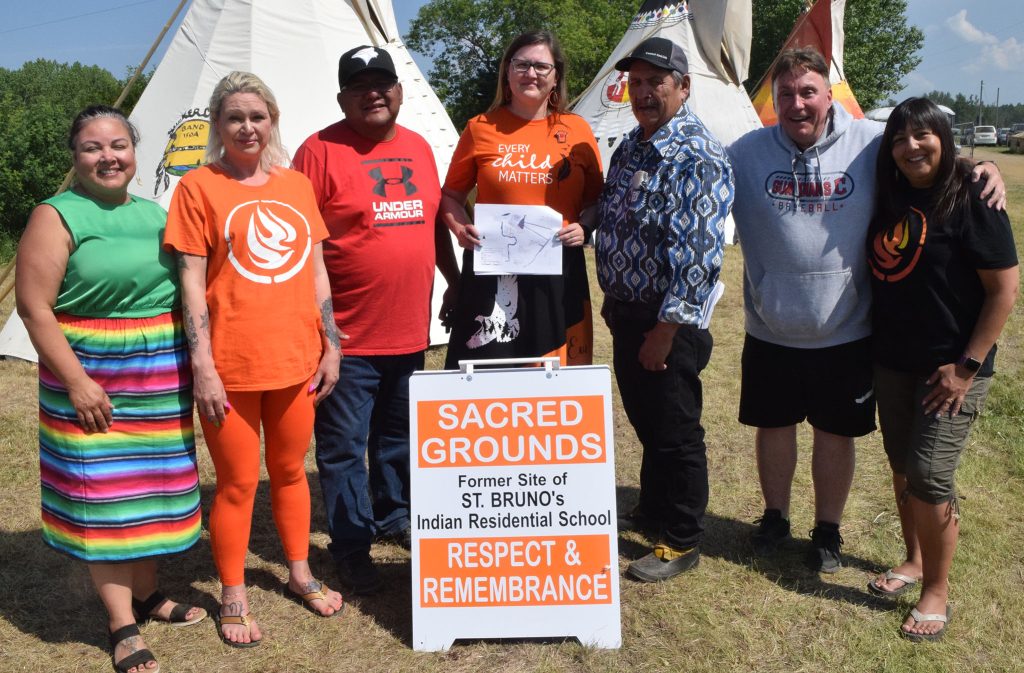
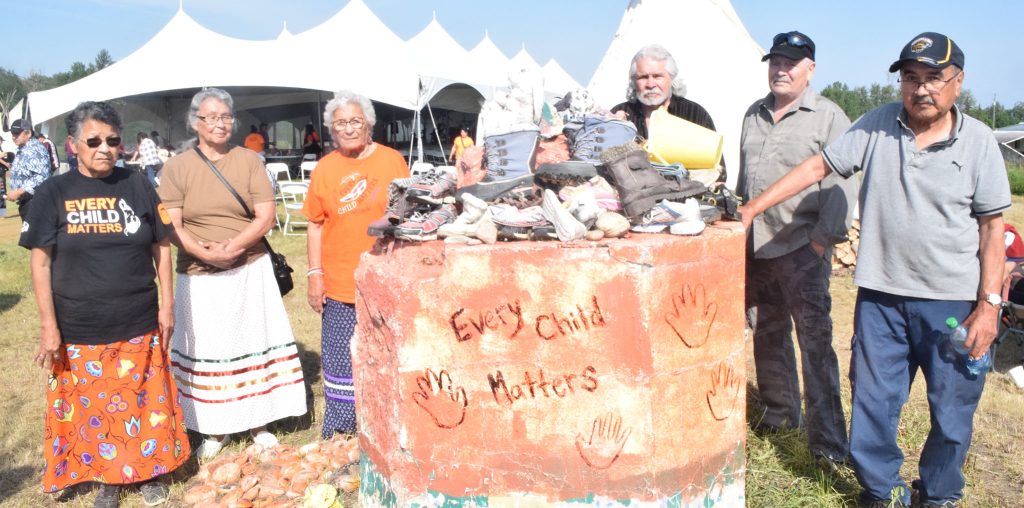
Initial results of a study at a former site of an Indian residential school in Joussard were unveiled at a special gathering June 23-25.
More than 500 survivors, descendants and community members from across Treaty 8 territory attended the St. Bruno’s Residential School Gathering.
The gathering focused on a report on work done to examine potential sites of unmarked graves of former students at the school that operated from 1913-69.
Results of the first phase of the St. Bruno’s Indian Residential School Ground-Penetrating Radar Report were presented by the University of Alberta ‘s Institute of Prairie and Indigenous Archaeology.
Sucker Creek First Nation Chief Roderick Willier welcomed people to hear the report. Willier also serves as Grand Chief of the Lesser Slave Lake Indian Regional Council.
“I attended St. Bruno’s and to read the numbers of ‘Possible Graves’ as ‘Provable Graves’, ‘Likely Graves”, which have been identified by the U of A researchers has been incredibly painful and emotional for me,” Willier said.
“But, so, too, are the oral testimonies and records we have systematically been collecting from survivors and other sources over the years on the horrific treatment all us kids had to endure.
“At times, it was terrible; for me, much of it remains unspeakable.”
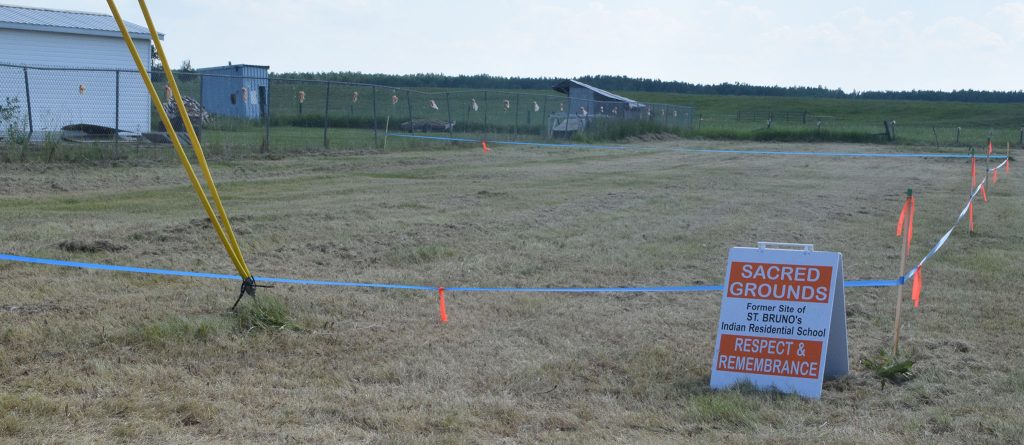
He said the St. Bruno’s site is sacred and hallowed ground for Indigenous people and lands that must not be disrespected as they have by some in the past – whether unintentionally or not.
“Rather than repatriating the remains or our loved ones, our precious little ones, as some have suggested – many of us now strongly believe the former residential school site itself is what needs to be repatriated,” Willier said.
“This, to further empower our people on the very site that was meant to disempower our children, our families and our communities.”
He is happy the project is moving forward.
“I am among those who believe this needs to happen so that we truly honour those who never made it home and allow them to respectfully and allow them to respectfully, and with dignity, find true and lasting peace,” Willler said.
Driftpile Cree Nation Chief Dwayne Laboucan also spoke on the work at the 1.13-acre site.
“The U of A summary report speaks for itself and is why we are here now – to honour those who never made it home, make sure they are never forgotten and to hopefully allow all Canadians to learn from the tragedies an horrific mistakes of the past,” Laboucan said.
“Words of sorrow and grief are often heard and appreciated, but we also need to see meaningful actions and a change of attitude among many and we encourage our neighbours to walk with us on a true and impactful journey of reconciliation in the years ahead.
“The trauma and pain of or shared experiences is not just a part ofhistory, they have and are continuing to be transferred intergenera- tionally and – without doubt – the residential school legacy continues to affect our people to this day.”
Treaty 8 Grand Chief Arthur Noskey says healing is vital in the journey.
“We hope there’s a holistic healing,” Noskey said.
“We are here as a support – as leaders for our people – we care for you.”
He added the tragic story needs to be heard and understood.
“Everyone needs to be aware of the past.
“We need to let the world know.”
Organizers planned to release the information at a large outdoor gathering, originally scheduled for May 19-21 over the Victoria Day weekend. However, wildfires in the region postponed the event.